04. May 2026
Admin
Chinese Court Rules on AI-Driven Layoffs as Workers Challenge Job Replacements
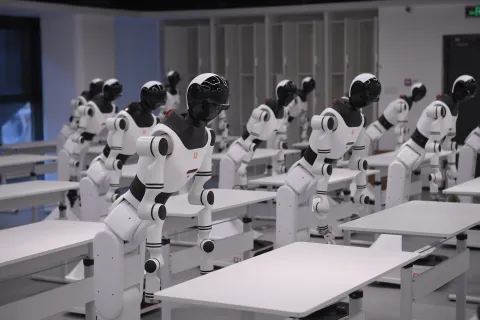
A recent court decision in China has brought global attention to the growing impact of artificial intelligence on jobs, as workers challenge companies replacing human roles with AI systems.
The case highlights the rising tension between technological advancement and labor rights, as businesses increasingly adopt automation to improve efficiency and reduce costs.
Quick Insight: AI is transforming the workplace—but it is also raising serious questions about job security and workers’ rights.
What the Case Is About
The legal dispute began when employees were laid off after their roles were replaced by AI-powered systems.
The affected workers took the case to court, arguing that the layoffs were unfair and lacked proper justification.
The court’s decision is now being closely watched as a potential benchmark for future AI-related labor disputes.
Why Companies Are Turning to AI
Businesses are rapidly adopting AI to stay competitive in a fast-changing digital economy.
Main reasons include:
- Reducing operational costs
- Increasing efficiency and speed
- Handling repetitive or data-heavy tasks
- Improving decision-making with data analysis
AI allows companies to perform tasks faster and often with fewer errors.
Impact on Workers
The shift toward automation is having a direct impact on employment.
Key concerns include:
- Job losses in routine and administrative roles
- Need for new digital skills
- Uncertainty about long-term job security
Workers are increasingly worried about being replaced rather than supported by AI technologies.
What the Court Decision Means
The court’s ruling provides insight into how governments may handle AI-related job disputes.
It raises important legal questions about:
- Employee rights in the age of automation
- Employer responsibilities when introducing AI
- Fair compensation and transition support
The outcome could influence future labor policies in China and beyond.
Global Implications of AI Job Replacement
This issue is not limited to China—countries around the world are facing similar challenges.
AI is already affecting industries such as:
- Customer service
- Finance and banking
- Manufacturing
- Data processing
Governments are beginning to explore policies to balance innovation with job protection.
How Workers Can Adapt
As AI continues to evolve, adapting to change is essential.
Recommended strategies:
- Learn digital and AI-related skills
- Focus on creative and problem-solving abilities
- Stay updated with industry trends
- Explore new career opportunities in tech-driven fields
The future workforce will require flexibility and continuous learning.
The Future of Work in the AI Era
AI is expected to both replace and create jobs.
While some roles may disappear, new opportunities will emerge in areas such as AI development, data analysis, and cybersecurity.
The challenge lies in managing the transition fairly and effectively.
Final Thoughts
The Chinese court case highlights a critical moment in the evolution of the global workforce.
As AI continues to reshape industries, balancing innovation with human impact will be essential.
The decisions made today will influence how workers and businesses coexist in the future of automation.
Tip: The best way to stay relevant in the AI era is to keep learning and developing skills that machines cannot easily replace.