Why Tech Leaders Are Pushing for Data Centers in Space
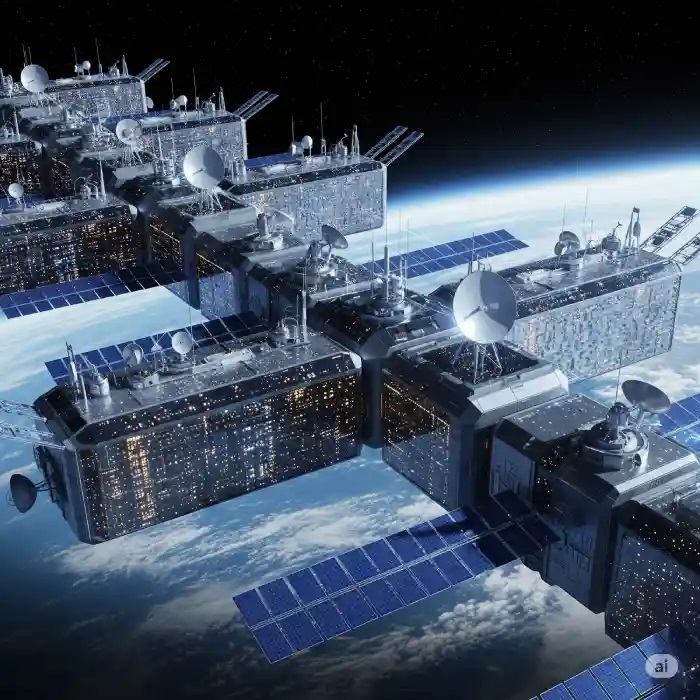
As global demand for computing power explodes, leading technology companies are exploring an unconventional solution: building data centers in space. What once sounded like science fiction is now being discussed as a serious long-term strategy to support AI growth, cloud computing, and the world’s digital infrastructure.
Quick Insight:
Data centers already consume enormous amounts of electricity and water. Space-based facilities could bypass many of these Earth-bound limitations.
1. Rising Pressure on Earth-Based Data Centers
• AI models, cloud services, and digital platforms require massive and constantly expanding computing capacity.
• Traditional data centers strain power grids, consume large volumes of water for cooling, and face land-use restrictions.
• In some regions, governments and communities are pushing back against new data center construction due to environmental concerns.
2. Why Space Is Being Considered
• Space offers near-unlimited access to solar energy, reducing dependence on terrestrial power grids.
• The vacuum of space allows for alternative cooling methods without water-intensive systems.
• Orbital data centers could operate continuously, free from many geographic and regulatory constraints on Earth.
3. The Role of AI and Hyperscalers
• The rapid rise of artificial intelligence has dramatically increased computing demand per user and per application.
• Major cloud providers and technology leaders are seeking scalable solutions that can support long-term AI growth.
• Space-based data centers are viewed as a future extension of hyperscale infrastructure rather than an immediate replacement.
4. Challenges and Technical Barriers
• Launching hardware into orbit remains extremely expensive, despite falling launch costs.
• Maintenance, repairs, and upgrades would require robotic systems or crewed missions.
• Data transmission latency and space debris risks must be carefully managed before large-scale deployment.
5. Long-Term Implications
• Space-based data centers could help reduce carbon footprints if powered primarily by solar energy.
• They may enable global digital services to scale without overwhelming national power grids.
• Over time, this approach could redefine how and where the world’s digital infrastructure is built.
Final Thoughts
The push for data centers in space reflects how urgent and massive global computing needs have become. While the idea faces significant technical and economic hurdles, it highlights a future where digital infrastructure may expand beyond Earth itself, reshaping how humanity powers and sustains the digital age.
Tip: Many breakthrough technologies start as experimental ideas before becoming essential infrastructure over time.













.jpeg)


























.jpg)