Chinese Companies Quietly Cut Jobs as Beijing Accelerates AI Adoption
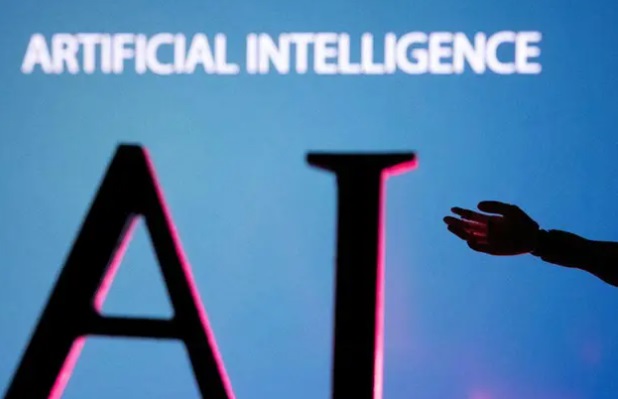
Chinese companies are increasingly turning to artificial intelligence to boost productivity, but the rapid adoption of AI is creating a new challenge for policymakers: how to modernize the economy without triggering widespread job losses. As Beijing pushes businesses to embrace AI technologies, many firms are reportedly carrying out "quiet layoffs" while reducing hiring and restructuring operations.
Key Update: Chinese firms are reportedly reducing contractor positions, slowing graduate recruitment, and restructuring departments as AI tools take over routine tasks, even as Beijing promotes widespread AI adoption across the economy.
China's Ambitious AI Expansion Plan
Artificial intelligence sits at the center of China's long-term economic strategy. Through its "AI Plus" initiative, Beijing aims to integrate AI technologies across key industries, seeking adoption rates of roughly 70% by 2027 and 90% by 2030. Policymakers view AI as a critical tool for boosting productivity, driving innovation, and supporting economic growth.
Rise of 'Quiet Layoffs'
Rather than announcing large-scale workforce reductions, many companies are reportedly implementing gradual staff cuts. Employees in technology, advertising, entertainment, and other sectors say contractors are being dismissed, hiring is slowing, and some positions are being eliminated through attrition rather than formal layoffs.
Why Companies Are Avoiding Mass Layoffs
Chinese labor regulations require companies to obtain approval for workforce reductions exceeding certain thresholds. At the same time, authorities remain highly sensitive to social stability concerns. As a result, businesses are seeking productivity gains from AI while avoiding the public backlash and regulatory scrutiny that could accompany major layoffs.
AI Tools Reshaping Daily Work
Many organizations have begun integrating advanced AI assistants and automation systems into routine operations. Employees report that tasks involving content creation, customer engagement, coding assistance, marketing support, and administrative workflows are increasingly being handled by AI-powered tools, reducing the need for large support teams.
Technology Sector Feels the Impact
The technology industry appears to be among the sectors experiencing the most significant workforce changes. Reports indicate that front-end development roles, marketing functions, and other routine digital tasks are increasingly being automated. Some companies are also reducing graduate hiring as AI systems become more capable.
Entertainment Industry Under Pressure
The entertainment sector is also undergoing major disruption. Some production companies are experimenting with AI-generated actors, virtual sets, and automated content creation tools. Industry workers report that production teams have been significantly reduced as companies look to lower costs and increase efficiency through AI adoption.
AI Usage Becoming a Performance Metric
Beyond replacing tasks, some employers are reportedly monitoring how extensively employees use AI systems. In certain workplaces, managers have begun tracking AI-related productivity metrics and incorporating them into performance reviews and promotion considerations, creating new pressures for workers to adapt quickly to emerging technologies.
Youth Employment Concerns Grow
The transition comes at a challenging time for China's labor market. Although AI-related job postings have increased sharply, analysts warn that job displacement may be occurring faster than new opportunities are being created. Younger workers and recent graduates are considered particularly vulnerable because many entry-level positions involve tasks that can be automated.
Government Balancing Growth and Stability
Chinese policymakers face a difficult balancing act. On one hand, AI is viewed as essential for maintaining competitiveness and supporting long-term economic growth. On the other hand, rapid workforce displacement could create social and economic challenges. Officials are reportedly studying the impact of AI on employment and exploring potential reskilling initiatives.
The Future of Work in China
Experts believe AI adoption will continue accelerating across Chinese industries. While new technology-related jobs are expected to emerge, the transition may require significant workforce retraining and adaptation. The coming years will likely determine whether AI-driven productivity gains can offset the employment disruptions currently being experienced in several sectors.
Final Thoughts
China's push to become a global leader in artificial intelligence is transforming how businesses operate. While AI promises major productivity gains and economic benefits, it is also creating uncertainty for millions of workers whose roles may be automated. The emergence of "quiet layoffs" illustrates the challenge facing both companies and policymakers: embracing technological innovation while maintaining employment stability and public confidence.
As AI adoption expands, China may become one of the world's most important case studies in how advanced economies manage the transition toward an AI-powered future.
Tech Insight: China's AI strategy aims to dramatically boost productivity across industries, but businesses and policymakers must navigate the difficult balance between automation, innovation, and employment stability.






















































.jpg)