Palantir CEO Warns Massive AI-Driven Layoffs Could Hurt Innovation and the Future of Work
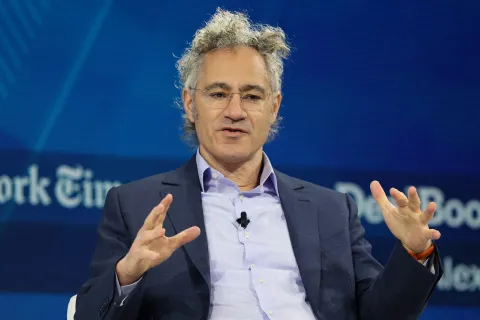
Palantir CEO Alex Karp has cautioned that widespread job cuts driven by artificial intelligence could ultimately damage innovation, economic growth, and the long-term health of the technology industry. His remarks come as businesses around the world increasingly adopt AI tools to improve efficiency and automate certain workplace tasks.
Key Update: Alex Karp argued that while artificial intelligence can significantly improve productivity, companies should be careful not to pursue large-scale workforce reductions that could weaken creativity, limit innovation, and undermine future economic opportunities.
Karp's View on AI and Employment
Speaking about the growing impact of artificial intelligence on the workplace, Karp emphasized that technology should enhance human capabilities rather than simply eliminate jobs.
According to the Palantir chief executive, businesses that focus solely on replacing workers with AI may achieve short-term cost savings but could face long-term challenges in maintaining innovation and organizational growth.
The Growing Debate Over AI and Jobs
The rapid advancement of generative AI has intensified discussions about the future of employment. Many organizations are exploring how AI can automate repetitive tasks, improve decision-making, and increase productivity across departments.
At the same time, concerns remain about the potential impact on employment, workforce development, and economic stability as businesses integrate increasingly capable AI systems.
Why Innovation Depends on People
Karp argued that human creativity, judgment, and problem-solving remain essential components of innovation. While AI can process information and generate insights at remarkable speeds, many breakthrough ideas still originate from human collaboration and experience.
He suggested that reducing headcount too aggressively could limit an organization's ability to adapt, experiment, and develop new opportunities in rapidly changing markets.
AI as a Productivity Tool
Rather than viewing artificial intelligence solely as a replacement for workers, many business leaders increasingly see it as a tool that helps employees perform their jobs more effectively.
AI systems can assist with research, data analysis, software development, customer service, content generation, and administrative tasks, allowing workers to focus on higher-value responsibilities.
Businesses Face Strategic Decisions
Companies adopting AI must decide how to balance efficiency gains with workforce development. Some organizations are investing in employee training programs designed to help workers adapt to new technologies and develop skills that complement AI systems.
Others are restructuring operations to integrate AI while retaining human expertise in critical areas.
Economic Impact of Widespread Layoffs
Economists have long noted that major technological shifts can reshape labor markets. While automation can create new opportunities and industries, rapid workforce reductions may also affect consumer spending, economic growth, and social stability.
Karp's comments reflect concerns that excessive reliance on workforce cuts could create unintended consequences for businesses and economies alike.
Palantir's Position in the AI Industry
Palantir has emerged as one of the most prominent companies developing AI-powered software solutions for governments, defense organizations, and commercial enterprises.
The company's AI platforms are designed to help organizations analyze data, improve operations, and make informed decisions while maintaining human oversight of critical processes.
Future Skills Will Matter More
As artificial intelligence becomes more widespread, experts believe demand will increase for skills such as critical thinking, creativity, leadership, communication, and complex problem-solving.
Workers who learn how to collaborate effectively with AI technologies are expected to be better positioned in the evolving job market.
Technology and Human Collaboration
Many industry leaders argue that the most successful organizations will be those that combine advanced technology with human expertise. Rather than replacing people entirely, AI may serve as a powerful tool that augments human capabilities and enables teams to accomplish more than either could achieve alone.
Looking Ahead
The debate surrounding AI and employment is likely to continue as technology evolves. Governments, businesses, educators, and workers will all play important roles in shaping how artificial intelligence influences the future workplace.
Finding the right balance between technological advancement and workforce development may prove essential for ensuring that AI delivers broad economic and social benefits.
Final Thoughts
Alex Karp's warning highlights one of the most important questions facing the AI era: how can organizations harness the power of artificial intelligence without sacrificing the human talent that drives innovation?
While AI offers enormous opportunities to improve productivity and efficiency, many experts believe its greatest value will come from empowering people rather than replacing them. As businesses continue investing in AI technologies, the challenge will be creating workplaces where humans and intelligent systems work together to generate sustainable growth and innovation.
Tech Insight: Many technology leaders now believe the future of work will depend less on humans versus AI and more on how effectively humans and AI collaborate to solve complex problems.








.jpeg)






1.jpeg)