XPeng CEO Takes Charge of Robotics Division as Humanoid Robot Mass Production Nears
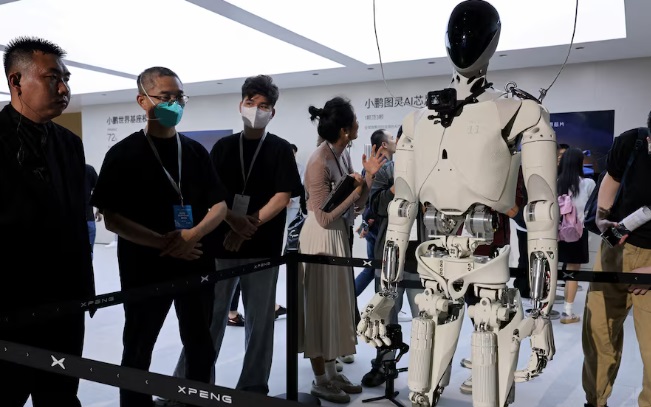
Chinese electric vehicle maker XPeng is accelerating its push into robotics, with CEO He Xiaopeng personally taking charge of the company's humanoid robot division. The move comes as XPeng signals that large-scale production of humanoid robots could be approaching faster than many industry observers expected.
Key Update: XPeng CEO He Xiaopeng has assumed direct leadership of the company's robotics unit, saying the humanoid robotics industry is moving closer to mass production as advances in artificial intelligence and hardware continue to accelerate.
XPeng Deepens Its Robotics Ambitions
Known primarily for its electric vehicles, XPeng has increasingly invested in artificial intelligence, autonomous driving technologies, and robotics. The company views humanoid robots as a natural extension of its expertise in AI systems, sensors, software development, and advanced manufacturing.
The latest leadership restructuring reflects XPeng's growing confidence in the future commercial potential of humanoid robotics.
CEO Personally Leads the Robot Division
XPeng founder and CEO He Xiaopeng will now directly oversee the company's robotics business. The decision highlights the strategic importance the company places on humanoid robots and demonstrates management's belief that the sector could become a major growth engine in the coming years.
Industry analysts note that when company founders take direct control of emerging divisions, it often signals a significant long-term commitment.
Humanoid Mass Production Appears Closer
According to XPeng's leadership, technological breakthroughs are bringing the humanoid robotics industry closer to large-scale manufacturing. Improvements in AI reasoning, machine vision, movement control, battery efficiency, and computing power have dramatically expanded what robots can accomplish.
As costs decline and capabilities improve, manufacturers believe commercial deployment could accelerate across multiple industries.
Why AI Is Transforming Robotics
The rapid evolution of generative AI and large language models has become one of the biggest catalysts for robotics development. Modern AI systems allow robots to understand instructions, process complex environments, make decisions, and interact more naturally with humans.
Many robotics companies believe that AI advancements achieved over the last few years have significantly shortened the timeline toward practical humanoid deployment.
Competition Intensifies in China
China has emerged as one of the world's most competitive humanoid robotics markets. Technology companies, automakers, startups, and research institutions are investing heavily in next-generation robotic systems.
Government support for AI and advanced manufacturing has also encouraged companies to accelerate development efforts, creating intense competition among domestic players.
Potential Industrial Applications
Early humanoid robots are expected to find applications in industrial settings where repetitive tasks, labor shortages, or hazardous conditions create operational challenges.
Factories, warehouses, logistics centers, and manufacturing facilities are among the environments where companies hope humanoid robots can provide immediate value while reducing operational costs.
Challenges Still Remain
Despite recent progress, several obstacles remain before humanoid robots become commonplace. Developers must continue improving reliability, battery life, safety systems, dexterity, and affordability.
Mass production will also require significant manufacturing capacity and supply chain coordination to bring costs down to commercially viable levels.
China's Broader Robotics Strategy
The Chinese government has identified robotics as a strategic industry capable of supporting economic growth and industrial modernization. Policymakers view advanced robotics as an important tool for addressing demographic challenges, improving productivity, and strengthening global competitiveness.
As a result, robotics companies are benefiting from growing investment, research funding, and supportive industrial policies.
Automakers Expanding Beyond Vehicles
XPeng's robotics push reflects a broader trend among automakers leveraging expertise developed for electric vehicles and autonomous driving systems. Technologies such as sensors, AI software, batteries, and electric motors are applicable to both vehicles and robots.
This overlap has encouraged several automotive companies to explore robotics as a future business opportunity.
The Future of Humanoid Robots
Industry experts believe the next decade could determine whether humanoid robots become a mainstream technology. If production costs continue to fall and AI capabilities continue improving, robots may eventually perform a wide range of physical and cognitive tasks across industries.
Companies like XPeng are positioning themselves early in anticipation of what many view as the next major technological revolution after electric vehicles and generative AI.
Final Thoughts
XPeng's decision to place its CEO directly in charge of the robotics division underscores the growing importance of humanoid robots in China's technology landscape. With advances in artificial intelligence accelerating development timelines, industry leaders increasingly believe mass production may be approaching sooner than expected.
While significant technical and commercial challenges remain, the convergence of AI, robotics, and advanced manufacturing is creating opportunities that could reshape industries worldwide. XPeng's latest move signals that the race to commercialize humanoid robots is entering a new phase, with China positioned as one of the industry's most influential players.
Tech Insight: Humanoid robotics is increasingly benefiting from breakthroughs in artificial intelligence, making large-scale deployment more realistic as companies race to develop commercially viable robotic workers.