Singapore Urges Financial Firms to Use AI to Create Better Jobs

Singapore’s government is urging financial institutions to adopt artificial intelligence in a way that improves job quality, not just reduces costs.
Instead of using AI only for layoffs or efficiency cuts, regulators want banks and financial companies to redesign roles, retrain workers, and create higher-value employment opportunities as AI becomes more widely adopted across the sector.
Key Update: Authorities in Singapore are encouraging banks and insurers to integrate AI in ways that enhance productivity while also supporting workforce retraining and the creation of better-skilled jobs.
AI Shift in the Financial Sector
Financial services in Singapore are undergoing rapid digital transformation, with artificial intelligence now being used in areas such as customer service, risk analysis, compliance, fraud detection, and investment research.
While these technologies improve speed and efficiency, they also raise concerns about job displacement, especially for routine and administrative roles.
Government Position on AI and Jobs
Singapore’s leadership is pushing a balanced approach to AI adoption.
Rather than allowing companies to use AI solely for cost-cutting, policymakers are encouraging firms to focus on “job redesign,” where employees are moved into more skilled roles that involve decision-making, strategy, and AI oversight.
Pressure on Financial Institutions
Major banks globally have already begun restructuring due to AI adoption, with some announcing workforce reductions while increasing investment in automation.
This trend has raised concerns about whether AI will reduce employment opportunities or simply change the type of work available.
Focus on Workforce Retraining
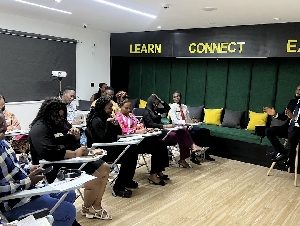
Singapore is strongly emphasizing retraining programs to help workers adapt to AI-driven systems.
The goal is to ensure that employees can transition into new roles that involve managing AI tools, analysing complex data, improving customer experience, and handling higher-level financial tasks.
AI as a Job Transformer, Not Just a Job Cutter
Officials argue that AI should not be viewed only as a replacement for human labour.
Instead, it can act as a “job transformer” by automating repetitive tasks while allowing workers to focus on more meaningful and creative responsibilities that require human judgment and expertise.
Singapore’s AI Strategy
Singapore has positioned itself as a global hub for artificial intelligence development, investing heavily in digital infrastructure, research, and partnerships with international tech companies.
The country aims to integrate AI into key industries while maintaining workforce stability and long-term economic competitiveness.
Balancing Innovation and Job Security
One of the biggest challenges is balancing technological progress with employment protection.
As AI becomes more powerful, governments and companies are under increasing pressure to ensure that workers are not left behind in the transition to automated systems.
Future Outlook for Finance Jobs
Experts expect that financial jobs will increasingly require hybrid skills, combining traditional finance knowledge with digital literacy and AI tool management.
Routine roles may shrink, but new opportunities are likely to emerge in AI supervision, financial analytics, compliance technology, and digital strategy.
Final Thoughts
Singapore’s push reflects a broader global debate about how artificial intelligence should be used in the workplace.
Rather than simply replacing workers, policymakers are increasingly calling for AI to be used as a tool to improve job quality, retrain employees, and create more sustainable employment models for the future.
Tech Insight: The biggest challenge in the AI era is not just automation, but ensuring workers can transition into new, higher-skilled roles as technology evolves.

















1.jpeg)