Doomsday Clock Moved to 85 Seconds to Midnight — Closest Ever
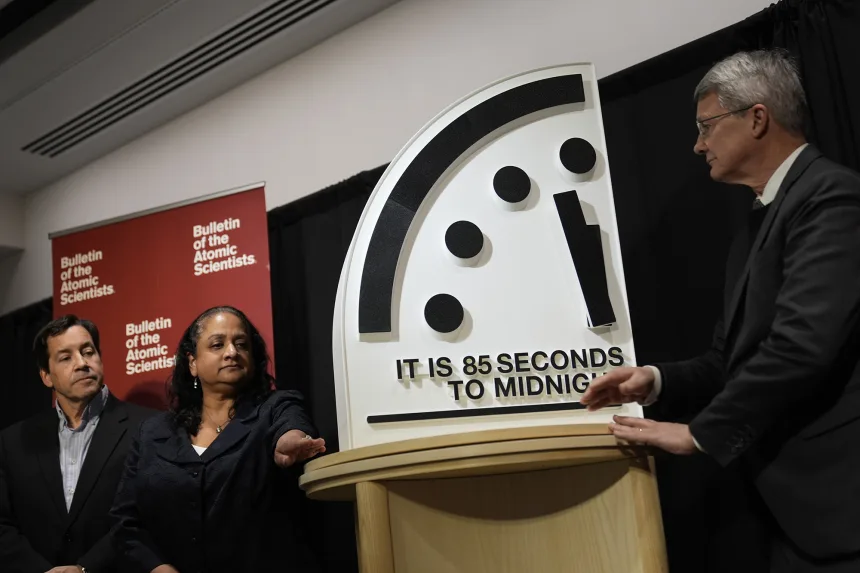
Scientists who track major global risks have adjusted the symbolic **Doomsday Clock** to **85 seconds before midnight**, the closest it has ever been since the clock was created in 1947. Midnight on this clock represents a potential global catastrophe — a moment where threats like nuclear war, climate change, and disruptive technologies could severely harm humanity.
Quick Insight: This change doesn’t literally mean a countdown to an actual “end of the world,” but it warns that global challenges are intensifying and that collective action is needed to reduce big risks.
What the Clock Represents
The Doomsday Clock is a **symbolic tool** used by experts to illustrate how close humanity is to major man-made threats — including nuclear conflict, runaway climate change, global pandemics, and fast-moving technologies like artificial intelligence that might be misused.
Every year, a group of scientists and experts reviews world events and trends and then resets the clock so its “time” reflects their assessment of overall danger. Moving closer to midnight signals that they see more risks than the year before.
Why It Was Adjusted in 2026
A combination of global pressures pushed the clock closer to midnight, including:
• **Nuclear tensions** among major powers.
• **Climate change** and record-breaking environmental impacts.
• **Rapid technological advances** such as AI and biotechnology without strong safeguards.
• **Weakening international cooperation** on treaties and shared risk reduction.
Experts emphasize that even though the setting is alarming, it is meant to encourage leaders, scientists, and the public to take concrete steps to address these issues together.
How to Think About the Clock
The Doomsday Clock isn’t a precise scientific instrument — it’s a **symbol** meant to stimulate discussion about major risks and inspire collective action. Midnight isn’t a literal deadline; instead, the clock reminds us that we influence how close or far we are from serious global threats through policy decisions, cooperation, and technology use.
While the time may feel dramatic, understanding the factors behind it can help people engage with issues like peace building, climate solutions, ethical technology development, and diplomatic cooperation.
Final Thoughts
This year’s Doomsday Clock setting at 85 seconds to midnight highlights serious global challenges facing humanity, but it also serves as a rallying point for constructive action. Awareness of these risks — and how people, communities, and nations can work together to address them — is an important part of shaping a safer future for everyone.
Tip: The Doomsday Clock is a **conversation starter** about our shared global risks — learning more about these issues can help you understand how communities and nations work toward solutions.






.jpeg)