22. January 2026
Admin
U.S. and China Still Collaborate Closely in AI Research
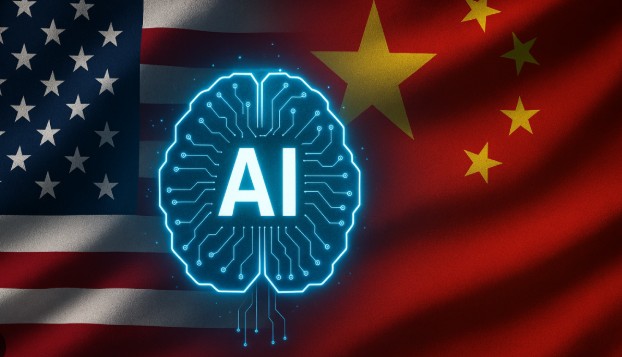
Despite geopolitical competition and strategic rivalries, researchers from the United States and China continue to work together on some of the world’s most advanced artificial intelligence projects. Analysis of recent research activity shows that scientists from both nations often partner on leading AI studies and contribute jointly to international conferences and publications.
Quick Insight:
Cooperation in AI research persists even as tensions rise between the two countries, reflecting how scientific progress is increasingly global and interconnected.
Ongoing Research Collaborations in AI
• Scientists from the U.S. and China have co-authored numerous AI research papers presented at major international gatherings.
• Joint studies span topics such as machine learning algorithms, neural networks, and large model architectures.
• These collaborations show that academic and technological frontiers continue to benefit from bringing diverse perspectives together.
Shared Models and Algorithm Development
• AI models developed in one country are often studied, adapted, and extended by researchers in the other.
• Core techniques, like transformer architectures, have influenced work on both sides of the Pacific.
• This cross-pollination of ideas helps push the field forward faster than isolated efforts alone.
Benefits of Cross-Border Collaboration
• Joint research often leads to insights that might be difficult for any single group to achieve independently.
• Collaborating teams pool expertise, data, and analytical methods to tackle complex challenges in AI.
• Studies involving multinational teams tend to attract broader interest and impact within the global research community.
Challenges and Future Outlook
• While ties remain strong in scientific circles, geopolitical tensions can create obstacles for collaboration.
• Export controls, funding restrictions, and policy limits sometimes make cross-border work more difficult.
• But many researchers and institutions continue to build bridges, driven by shared goals in advancing knowledge and innovation.
Final Thoughts
The relationship between the United States and China in artificial intelligence research highlights a complex mix of competition and cooperation. Even with separate national priorities and strategic rivalries, scientists find common ground in shared inquiry and discovery. Their work shows that progress in cutting-edge technology often crosses borders, uniting minds in pursuit of common breakthroughs.