Physicists Demonstrate “Time Mirrors,” Reversing Electromagnetic Waves in Time
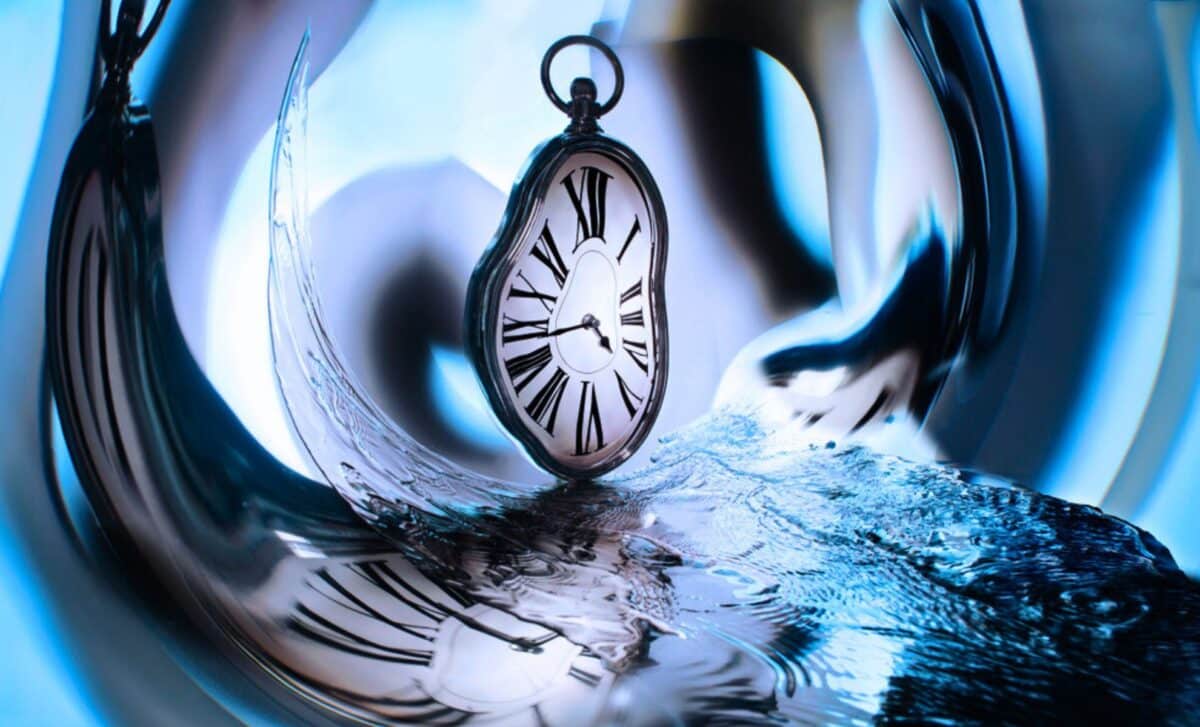
In a landmark physics experiment, scientists have for the first time confirmed the existence of a phenomenon known as a **“time mirror,”** in which waves can be made to travel backward in time rather than just in space. This breakthrough demonstrates a new level of control over how electromagnetic waves behave, opening doors to future technologies in communications, computing and wave manipulation.
Quick Insight:
Unlike an ordinary mirror that reflects light back the way it came, a *time mirror* reflects a wave backward along its timeline — effectively sending part of its signal in reverse.
1. What a Time Mirror Does
• Instead of causing a wave to bounce back in space like a traditional mirror, a time mirror causes part of a wave to retrace its path backward in time.
• This is achieved by abruptly changing the properties of the medium through which the wave is traveling, creating a sudden boundary in time.
• The result is a *time-reversed copy* of the original signal that behaves as though it has been sent backward through time.
2. How Scientists Made It Happen
• Researchers engineered a *metamaterial* — a specially crafted structure with properties not found in natural materials — and embedded it with ultra-fast electronic switches.
• At a precise moment, the material’s electromagnetic properties were changed instantaneously, creating a *temporal interface* that caused part of the incoming wave to reverse direction in time.
• This temporal flip affects how the wave propagates, generating a reversed version of part of the signal within the experiment.
3. Practical Effects and What It Looks Like
• If one could visualize the effect with visible waves, a time-reversed signal would appear as though its final moments came first and its start came last — similar to watching a video in reverse.
• In experiments, researchers also observed changes in the *frequency* of the waves as they were reflected through time.
• Although this phenomenon doesn’t reverse real objects or events themselves, it demonstrates that waves — and information carried by them — can be *controlled* in entirely new ways.
4. Why It Matters
• This discovery confirms theoretical predictions about *time reflection* and provides a new tool for manipulating electromagnetic signals in space and time.
• Potential applications include advanced communications, improved imaging technologies, adaptive signal filtering, and novel approaches to wave-based computing.
• The research deepens our understanding of wave dynamics and suggests new ways of interacting with signals at fundamental levels.
Final Thoughts
The experimental confirmation of *time mirrors* marks a significant milestone in physics. By showing that waves can be engineered to reverse through time under controlled conditions, scientists have opened a fascinating new chapter in wave physics — one that blurs the traditional boundaries of signal control and could inspire future breakthroughs in technology and information science.
Tip: While the idea of reversing time sounds like science fiction, *time mirrors* are grounded in real physics and involve controlling how waves behave — a capability that may lead to practical tools in future technologies.