NASA’s Psyche Mission Reveals One of the Universe’s Most Metal-Rich Asteroids
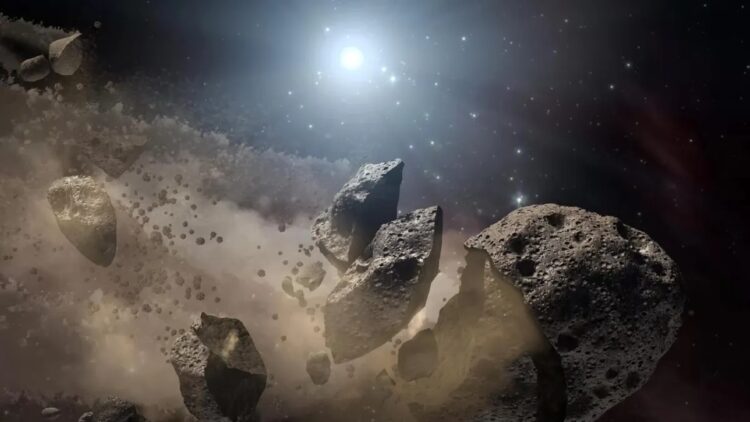
In an exciting development for space science and future resource exploration, NASA is studying an asteroid that could hold vast amounts of precious metals — including gold, iron, and nickel. The object, known as **16 Psyche**, is unlike most rocky asteroids. Its metallic composition suggests it may be the exposed core of a protoplanet, and its estimated metal content dwarfs known terrestrial reserves.
Quick Insight:
While discussions about its wealth make headlines, NASA’s mission is focused first on scientific mapping and analysis — not mining — which could reshape our understanding of planetary formation and cosmic metal distribution.
1. What Makes 16 Psyche Special
• 16 Psyche orbits the Sun in the main asteroid belt between Mars and Jupiter.
• Unlike typical rocky asteroids, it consists largely of metal — iron and nickel — with potential traces of gold and other precious elements.
• Its composition suggests it may be the remnant core of a failed planet, offering scientists a rare peek into planetary interiors that would otherwise be hidden beneath planetary crusts.
2. A Mission to Understand, Not To Mine
• NASA launched the **Psyche spacecraft** in late 2023, and it is expected to reach the asteroid by 2029.
• The mission’s primary goal is to map the asteroid’s surface, analyze its structure, and measure its magnetic field.
• Understanding Psyche’s composition will offer scientists valuable data on how metal-rich bodies form and how planetary cores evolve.
3. The Idea of Cosmic Wealth
• Some estimates place the total value of Psyche’s metal content at astronomically high levels, far exceeding the total known metal reserves on Earth.
• This has sparked public fascination with the idea of asteroid mining and “cosmic treasure,” though few experts suggest such wealth would translate directly into Earthly riches.
• In fact, flooding the global market with extreme quantities of precious metals could depress their value and disrupt economies.
4. Scientific and Economic Implications
• Studying Psyche helps scientists learn about early solar system history and the processes that shaped planets like Earth.
• If future technology makes asteroid resource extraction feasible, the economic landscape could shift — but not without overcoming enormous technical, legal, and logistical challenges.
• Questions of space property rights, cost of transport, and refining operations remain unresolved.
Final Thoughts
The Psyche mission represents a bold step in space exploration, blending planetary science with the dream of someday tapping into space resources. Whether or not asteroid mining becomes reality, the data returned from Psyche will deepen our understanding of the universe’s most fundamental processes — from how metals form in stars to how planets differentiate into crust and core.
Tip: When thinking about “cosmic treasure,” it’s important to differentiate between theoretical value and practical feasibility — the universe may hold massive metal resources, but accessing them presents enormous hurdles.








.jpeg)