China’s Open-Source AI Surge Raises Alarm Over U.S. Tech Leadership
A U.S. advisory body has warned that China’s rapid rise in open-source artificial intelligence could threaten America’s long-standing leadership in the global AI race.
Quick Insight: Chinese AI models are gaining global popularity due to lower costs and open access, creating a powerful competitive advantage over U.S. companies.
What the Report Says
The U.S.-China Economic and Security Review Commission stated that China’s dominance in open-source AI is creating a “self-reinforcing advantage”. This allows Chinese firms to compete closely with U.S. companies despite limited access to advanced semiconductor technology.
Why China Is Gaining Ground
Chinese companies such as Alibaba, Moonshot, and MiniMax are leading global usage rankings on platforms like Hugging Face. Their success is largely driven by offering affordable and accessible AI models that developers worldwide can easily adopt.
The Power of Real-World Data
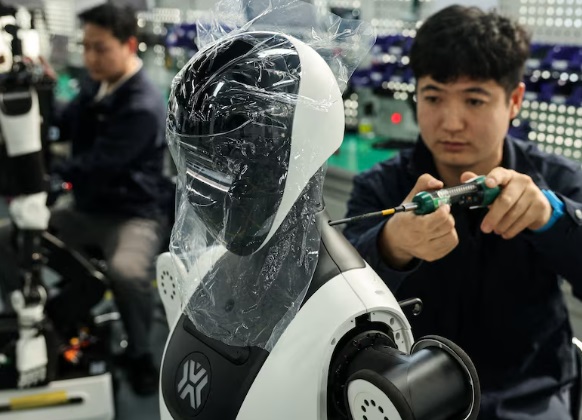
China is embedding AI across industries like manufacturing, logistics, and robotics. This generates massive real-world data, which continuously improves AI systems and gives Chinese firms a practical advantage in developing smarter models.
Closing the Technology Gap
Despite U.S. export restrictions on advanced chips, Chinese AI developers are rapidly narrowing the performance gap with Western models. Some Chinese systems are even outperforming competitors in global downloads and adoption.
Global Adoption Rising
International companies are beginning to adopt Chinese AI tools due to their flexibility and lower cost. This growing global usage could strengthen China’s influence in shaping the future of AI standards and ecosystems.
Concerns and Risks
While China’s open approach boosts innovation, U.S. officials have raised concerns about potential security risks, data privacy issues, and the possibility of political bias embedded in widely used AI systems.
Final Thoughts
The rise of China’s open-source AI strategy signals a major shift in the global tech landscape. As competition intensifies, the battle for AI dominance may depend not only on advanced technology but also on accessibility, cost, and global adoption.
Tip: Open-source technology can spread faster than proprietary systems. In the AI race, the most widely adopted tools—not just the most advanced—may ultimately shape global leadership.