Large-Scale Ion Trap Quantum Computing Moves Closer to Reality
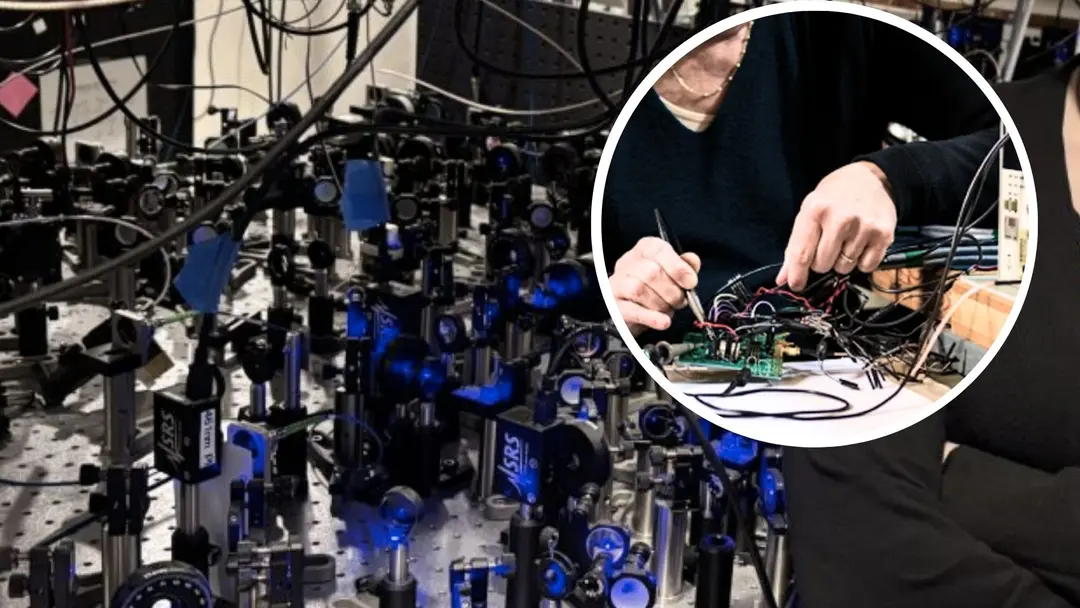
Scientists and engineers are making significant progress toward building large-scale ion trap quantum computers — machines that could one day perform tasks far beyond the reach of today’s classical computers. These advances bring the promise of more powerful and reliable quantum systems closer than ever before.
Quick Insight: Ion trap quantum computing uses charged atoms (ions) held in electromagnetic traps to store and manipulate quantum information. Recent breakthroughs are helping overcome key engineering challenges that have slowed progress toward larger, more practical quantum machines.
What Makes Ion Trap Systems Special
Ion trap quantum computers use individual charged atoms suspended in a vacuum and controlled with lasers and electromagnetic fields. These ions act as quantum bits (qubits) that can represent more information than ordinary bits in classical computers. Because ions are highly isolated and stable, they can maintain their quantum state for longer — a major advantage in quantum computing.
Engineering Challenges and Solutions
Building large-scale quantum computers has been difficult because qubits are extremely sensitive to their environment. Engineers are developing advanced traps, lasers, and control systems that keep ions stable and reduce errors. Recent prototype systems have shown improved performance and the ability to link many qubits together more reliably than earlier models.
Why Scale Matters
Small quantum systems can demonstrate basic quantum operations, but real-world applications require far more qubits working together. Larger ion trap systems could handle complex calculations in areas like materials science, cryptography, drug discovery, and optimization problems much faster than today’s fastest supercomputers.
Collaboration and Future Roadmaps
Researchers from universities, technology companies, and national labs are working together to accelerate progress. These partnerships help share expertise and infrastructure, bringing ideas from research labs into practical engineering solutions. Roadmaps for quantum hardware are increasingly focusing on scalable systems with hundreds or even thousands of qubits.
Final Thoughts
Progress in ion trap quantum computing shows how quickly quantum technology is evolving. As scientists overcome major challenges, the dream of powerful, large-scale quantum machines moves closer to reality. These systems could transform science, technology, and computation in the decades ahead.
Tip: Quantum computing is a rapidly evolving field. Staying curious and learning the basics now can prepare you for future careers in science, engineering, and technology.
















.jpeg)