MCU Manufacturers Expand Beyond Traditional Products in a Growing Market
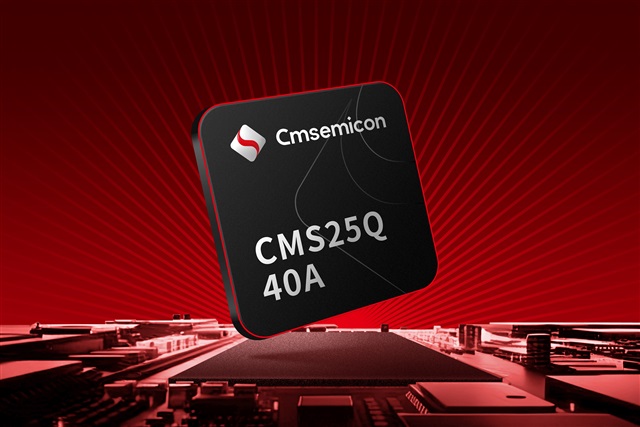
The global **microcontroller (MCU)** market continues to evolve as companies broaden their product portfolios and target emerging applications. Once primarily used for simple embedded control in devices, MCUs are now being paired with new technologies, entering related areas like non‑volatile memory and AI‑ready architectures to keep pace with rising demand in consumer, industrial, and smart systems.
Key Insight: As embedded systems become more intelligent and connected, MCU makers are adapting — developing new chips and branching into adjacent markets to capture growth across a wide range of technology sectors.
New Product Entries and Market Expansion
Semiconductor firms are pushing beyond classic MCU roles. One recent development saw a Shanghai‑listed chip designer launch its **first low‑power SPI NOR Flash memory chips** — a move that broadens its reach into non‑volatile memory products alongside its MCU offerings to better serve diverse embedded system needs.
This type of expansion reflects how chip suppliers are responding to trends in smart devices, storage demands, and connected applications that require both processing and memory functions in compact chip solutions.
Market Growth and Emerging Applications
Industry research indicates that the global MCU market is entering a **new growth cycle**, with projected expansion driven by applications such as automotive systems, industrial automation, IoT devices, and embedded AI. Some estimates suggest the market could exceed **US$30 billion by 2030**, with rising adoption of 32‑bit MCUs and increased integration of AI capability at the edge.
MCUs are now key components in smart consumer electronics, robotics, medical wearables, and energy‑efficient industrial equipment — roles that require higher processing capability, security features, and low‑power performance.
Innovations in MCU Technology
The industry is seeing notable innovation, from highly compact MCU designs that optimize space in tiny electronics to emerging chips that support edge artificial intelligence and neural processing. For example, companies are developing microcontrollers that combine traditional control functions with advanced processing for real‑time data handling in smart systems.
These technological advancements highlight how MCU designs are adapting to modern needs — from efficient power use in everyday sensors to supporting complex, localized computing tasks that once required larger processors.
Final Thoughts
The MCU market’s evolution reflects broader shifts in the technology landscape. As everyday devices, industrial systems, and smart infrastructure demand more intelligence and connectivity, MCU makers are innovating, expanding into adjacencies like memory products and AI‑ready designs. This broadening of capabilities not only strengthens their market position but also supports a new wave of smart products that define the future of embedded computing.
Tip: When exploring smart system design or connected product development, look for MCUs with integrated memory, AI features, and low‑power performance to get the most value from modern embedded solutions.













.jpeg)