NASA’s Artemis II Mission: Humanity’s Return to the Moon in 2026
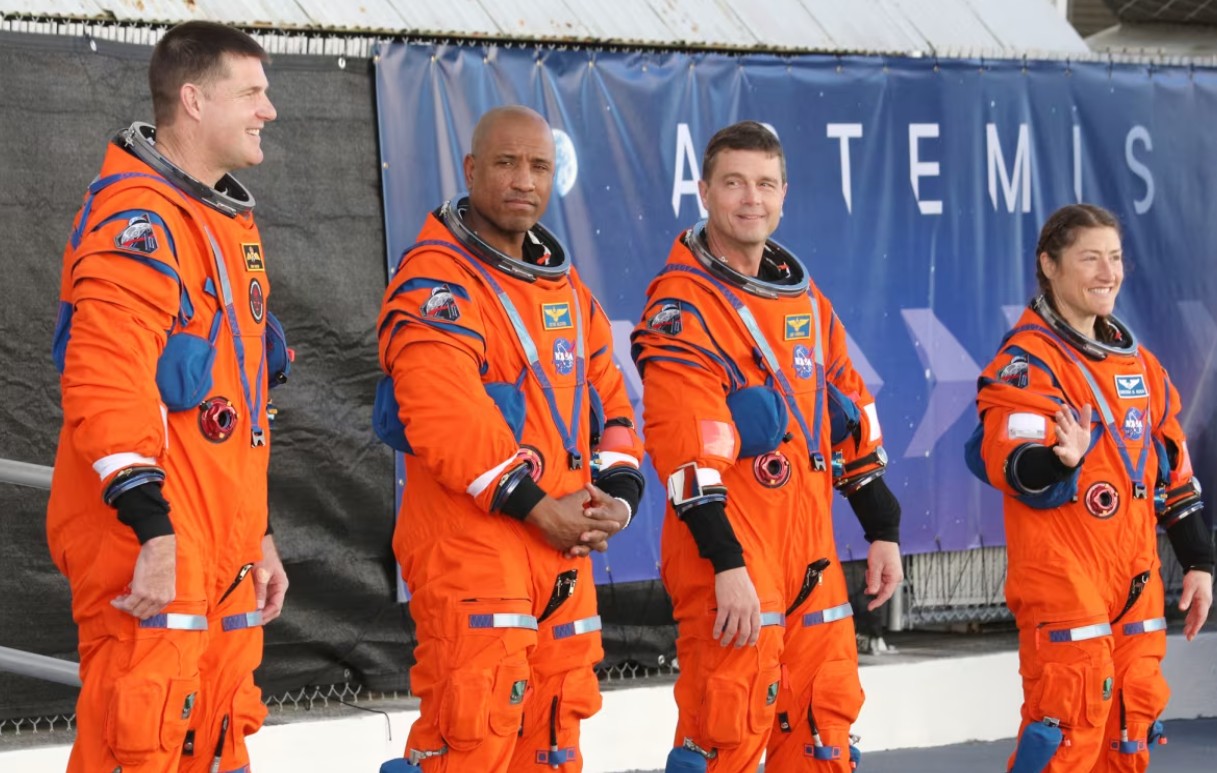
In 2026, NASA is preparing **Artemis II**, a historic crewed spaceflight that will send astronauts around the **Moon** — the first time humans have journeyed beyond low Earth orbit in over half a century. This mission marks a major milestone in the **Artemis program**, which aims to eventually return astronauts to the lunar surface and pave the way for future exploration of Mars.
Quick Insight:
Artemis II is not a lunar landing mission, but a **10-day lunar flyby** designed to test spacecraft systems and life-support capabilities with a crew aboard, strengthening deep space exploration capabilities.
Mission Overview
• **Name:** Artemis II — second mission in NASA’s Artemis lunar campaign.
• **Type:** Crewed lunar flyby.
• **Duration:** Approximately **10 days**.
• **Spacecraft:** **Orion** crew capsule atop the **Space Launch System (SLS)** rocket.
• **Launch Window:** As early as **February 6–7, 2026**, with operations continuing through a launch window into April.
• **Launch Site:** **Kennedy Space Center, Florida**.
• **Goal:** Validate critical systems and demonstrate human deep space operations ahead of future landing missions.
Crew and Historic Significance
• **Reid Wiseman** — Commander (NASA).
• **Victor Glover** — Pilot (NASA).
• **Christina Koch** — Mission Specialist (NASA).
• **Jeremy Hansen** — Mission Specialist (Canadian Space Agency).
• Artemis II will be the first human spaceflight around the Moon since 1972’s Apollo missions.
• The mission prepares NASA for **Artemis III**, currently planned to land astronauts — including the first woman and first person of color — on the lunar surface.
Science and Exploration Objectives
• Test life-support systems, navigation, communication, and spacecraft procedures with crew aboard.
• Collect critical data on human physiological responses in deep space conditions.
• Conduct lunar science observations as Orion flies near the Moon, including imaging geological features and communicating observations with Earth-based teams.
• Prepare operations, hardware, and protocols necessary for sustained lunar missions and eventual Mars exploration.
Why Artemis II Matters
• First human spaceflight around the Moon in over 50 years, marking a new chapter in space exploration.
• A key test of the powerful **Space Launch System** and **Orion** spacecraft in real deep-space conditions.
• Strengthens international cooperation — with a Canadian astronaut aboard — and lays groundwork for broader missions to the lunar surface and beyond.
• Advances scientific understanding of deep space travel and human endurance, invaluable for future missions.
Final Thoughts
Artemis II represents a historic moment for space exploration and human ingenuity. As astronauts prepare for a return to lunar vicinity, this mission will stretch the capabilities of modern spacecraft, inspire new generations, and set the stage for humanity’s next giant leap — returning to the Moon and eventually reaching Mars.


















.jpeg)