13. January 2026
Admin
ISRO’s PSLV Mission Fails Again: Third‑Stage Glitch Causes Loss of 16 Satellites
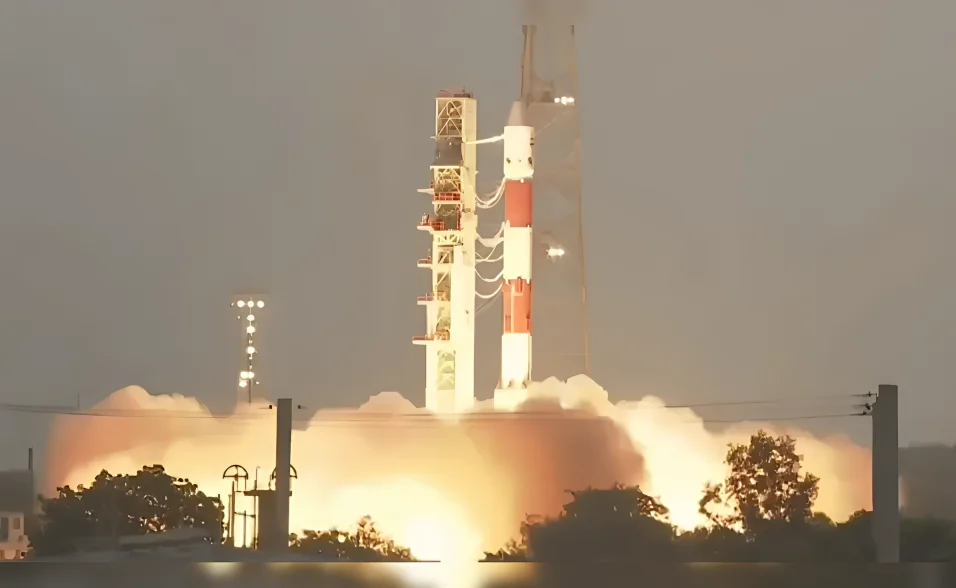
India’s space ambitions suffered a significant blow when the **Indian Space Research Organisation’s (ISRO) Polar Satellite Launch Vehicle (PSLV)** failed to place its payloads into orbit during the first mission of 2026. A malfunction in the rocket’s **third stage** caused a deviation from its flight path, resulting in the loss of **all 16 satellites** aboard the mission.
Quick Insight:
The PSLV has long been considered ISRO’s reliable “workhorse” launch vehicle, with decades of successful missions. This is the **second consecutive failure** linked to a third‑stage anomaly, prompting scrutiny over technical and quality control processes.
What Went Wrong
• The PSLV‑C62 rocket lifted off from the Satish Dhawan Space Centre at Sriharikota and performed nominally during the first two stages.
• Shortly after the third stage ignited, engineers detected disturbances in the vehicle’s performance, followed by a deviation from the planned trajectory.
• The anomaly prevented the fourth stage from placing the satellites into their intended sun‑synchronous orbit, leading to the mission’s failure.
Impact of the Failure
• Among the lost payloads was **EOS‑N1 (Anvesha)**, a hyperspectral Earth observation satellite developed for strategic and civilian monitoring.
• The mission also included 15 other satellites from Indian startups, academic institutions, and international partners, representing scientific experiments, technology demonstrations, and commercial payloads.
• The setback affects not only ISRO’s launch cadence but also the plans and research of institutions relying on these satellites for operational use.
Historical Context and Concerns
• Earlier in 2025, another PSLV mission (PSLV‑C61) also failed due to a third‑stage anomaly, preventing the EOS‑09 Earth observation satellite from reaching orbit.
• These back‑to‑back issues have raised questions about the reliability of the rocket’s third‑stage components and have triggered a deeper investigation by ISRO.
• Engineers and analysts are closely reviewing data to determine the root causes and prevent future mission failures.
Final Thoughts
The recent PSLV mission failure underscores the complexities of space launch systems, even for vehicles with long histories of success. As ISRO examines the anomaly and works toward solutions, the space community awaits updates on corrective measures and future launch plans. The incident also highlights the critical importance of robust engineering and quality control in maintaining confidence in national and commercial space efforts.