12. January 2026
Admin
Scientists Measure Quantum Entanglement Speed for the First Time Using Attoseconds
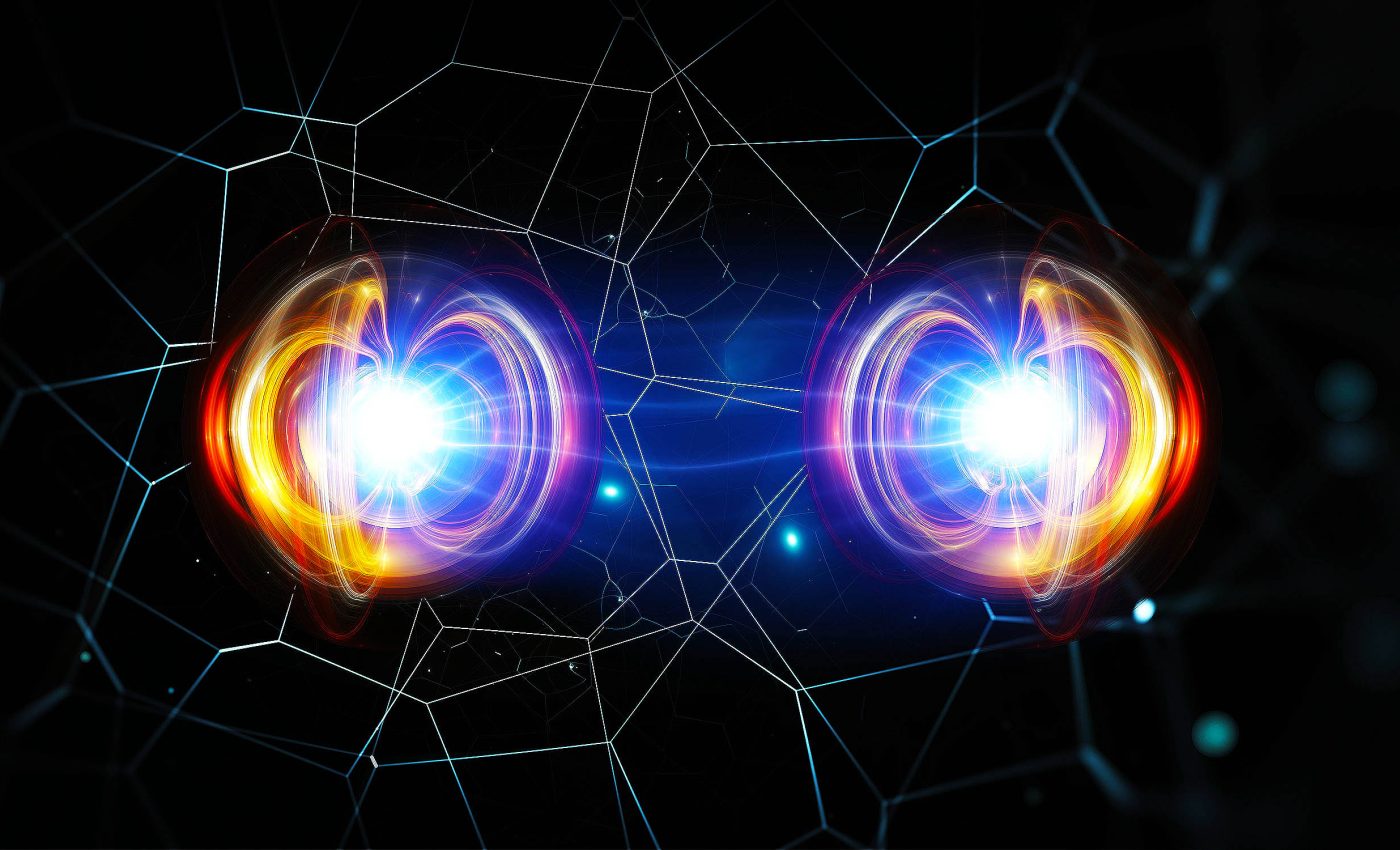
Scientists have achieved a major breakthrough in quantum physics by measuring, for the first time, how quickly quantum entanglement forms. Using attoseconds — an unimaginably short unit of time — researchers were able to observe the earliest moments when particles become entangled, shedding new light on one of the most mysterious processes in nature.
Quick Insight:
Quantum entanglement was long assumed to happen instantaneously. This new research shows that while it is extremely fast, the process still unfolds over a measurable span of time at the attosecond level.
Understanding Quantum Entanglement
• Quantum entanglement occurs when two particles become linked so that the state of one instantly corresponds to the state of the other, no matter how far apart they are.
• This phenomenon defies classical physics and has been described as one of the strangest features of the quantum world.
• Until now, scientists lacked tools fast enough to observe how entanglement actually begins.
How the Measurement Was Achieved
• Researchers used ultrafast laser pulses to trigger interactions inside atoms, causing electrons to separate.
• As one electron was ejected and another remained bound, scientists tracked how their quantum states became connected.
• By analyzing subtle timing delays in electron behavior, they estimated that entanglement forms within just a few hundred attoseconds.
• This marks the first time entanglement speed has been directly measured rather than inferred.
Why Attoseconds Matter
• An attosecond is one quintillionth of a second, allowing scientists to observe electron motion inside atoms.
• Technologies capable of measuring at this scale represent the cutting edge of modern physics.
• Mapping entanglement to real time brings scientists closer to controlling quantum systems with extreme precision.
Final Thoughts
Measuring the speed of quantum entanglement represents a milestone in physics and deepens our understanding of how the quantum world operates. This discovery could play a crucial role in advancing quantum computing, ultra-secure communications, and future technologies that rely on quantum mechanics.