06. January 2026
Admin
Scientists Engineer a Crystal That Twists Magnetism Into Exotic Swirls
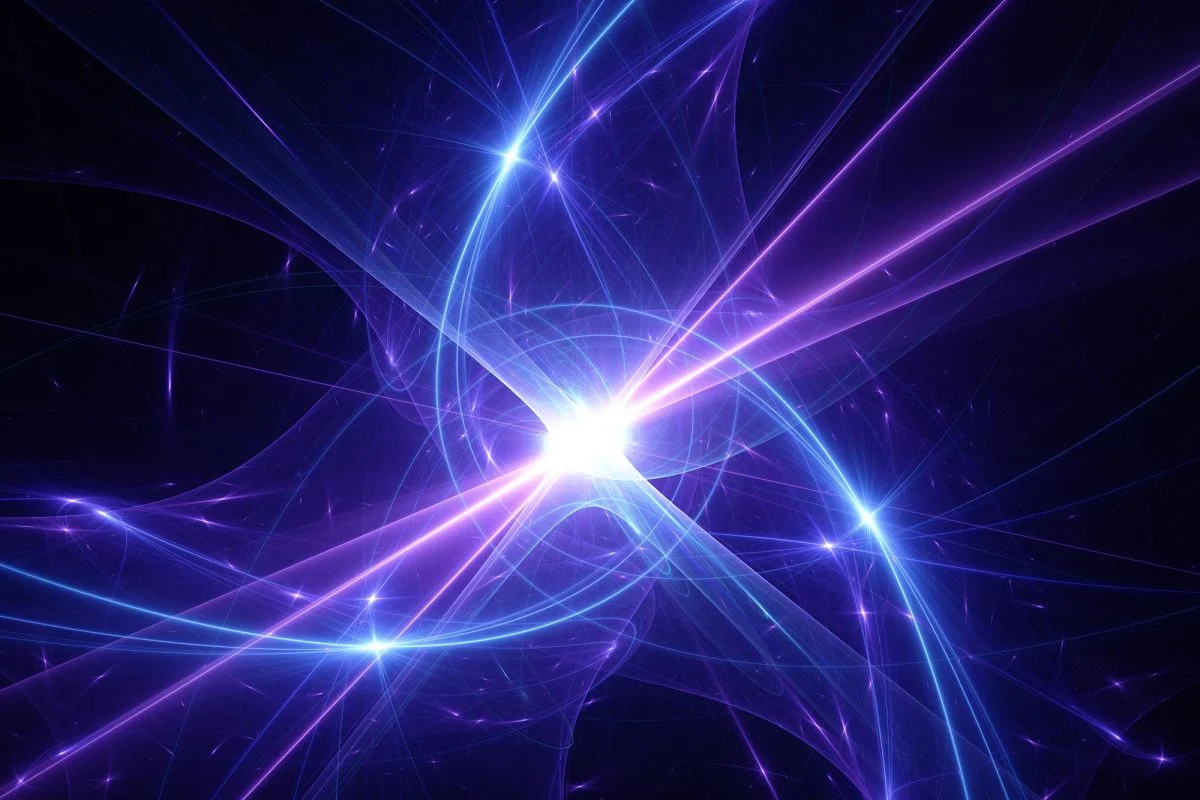
A team of researchers has created a novel crystalline material with unusual magnetic behavior: instead of having its atomic magnetic moments aligned uniformly, they spontaneously form **intricate swirling patterns**. This breakthrough uncovers a new way to manipulate magnetic properties and could lead to future advances in data storage, low-power electronics, and quantum technologies.
Quick Insight:
The unusual magnetic patterns arise from a carefully engineered clash between two different crystal structures, which causes **atomic spins** to organize into repeating spiral-like textures rather than conventional aligned states.
How the Material Was Designed
• Researchers combined two closely related compounds that have different structural symmetries within their crystal lattices.
• When these materials are fused together and cooled into a solid, their competing crystal arrangements create a kind of internal “frustration” at their boundaries.
• This instability in the crystal structure translates into complex magnetic patterns where atomic magnetic moments twist into **pointed swirls** instead of lining up uniformly.
What Makes the Magnetic Swirls Special
• In a typical magnet, atomic spins tend to align in the same direction, generating a straightforward magnetic field.
• In the new crystal, those spins instead form looping, repeating spiral arrangements called **skyrmion-like textures**, which behave differently from traditional magnetic order.
• These swirling arrangements are topologically protected, meaning they can be stable even under disturbances — a property that makes them interesting for next-generation information technologies.
Potential Applications and Impact
• Materials with swirling spin patterns could **store more information per unit area** than conventional magnetic media, enabling denser data storage.
• Because skyrmion-like spin textures can be moved with very little energy, devices built from such materials could **consume less power** than traditional electronics.
• The findings also point toward new avenues in **quantum computing and spintronics**, where controlling electron spin (rather than charge) could lead to faster, more efficient information processing.
Final Thoughts
This newly engineered magnetic crystal demonstrates how tailoring atomic structure can produce unexpected and useful magnetic behaviors. By twisting the very way atoms interact, scientists are unlocking magnetic states that could power the next generation of data technology, energy-efficient computing, and quantum devices — taking us closer to materials that behave in ways not seen in nature before.















.jpeg)