NASA Curiosity Rover Finds Pure Sulfur Crystals on Mars After Breaking Rock
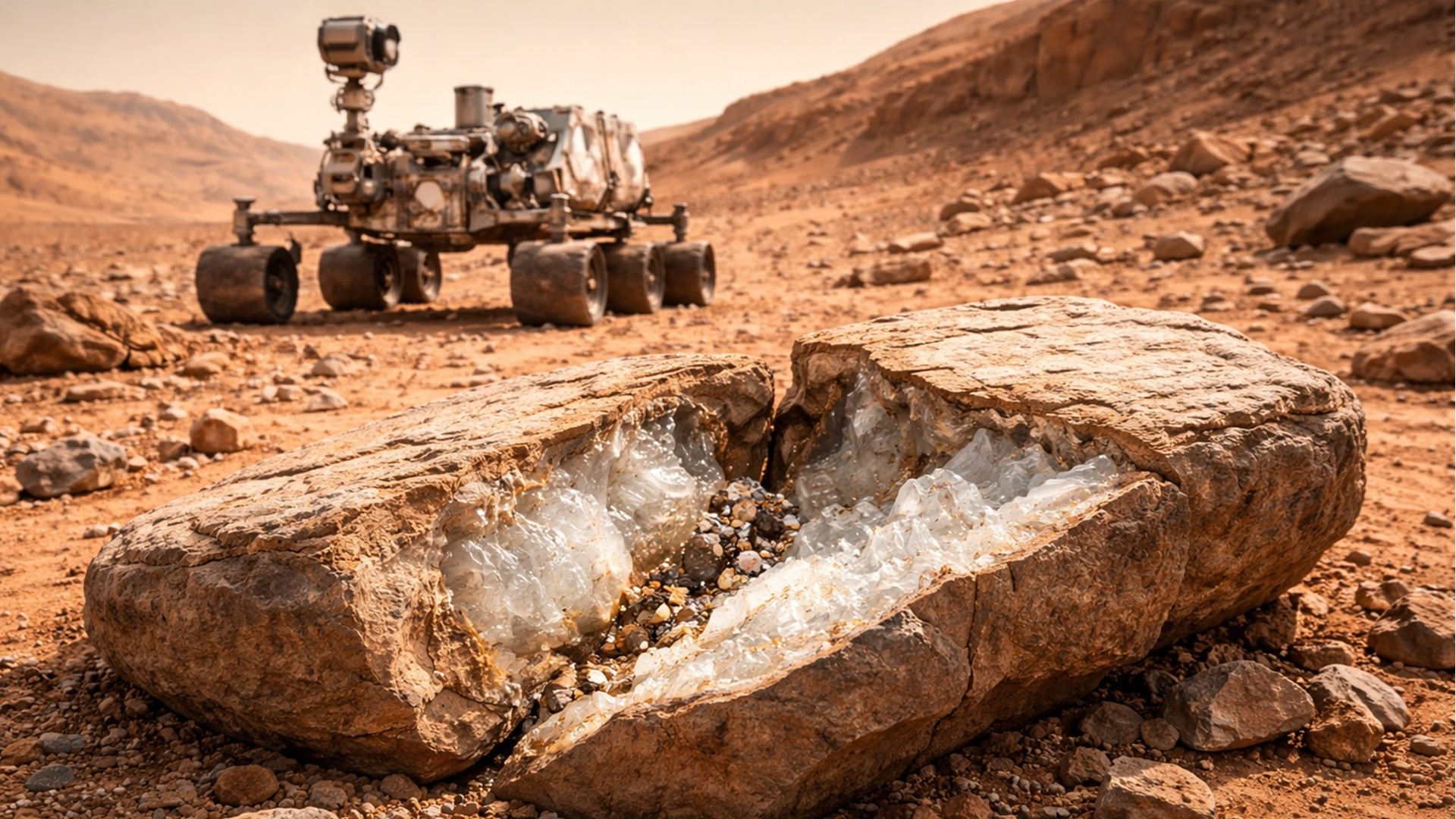
NASA’s Curiosity rover has uncovered a surprising find on Mars — bright yellow **crystals of pure elemental sulfur** hidden inside a rock that was accidentally crushed by the rover’s wheel during its exploration of the Gediz Vallis channel on Mount Sharp. This discovery challenges previous ideas about Mars’ geological history and suggests environmental processes that scientists are still trying to understand.
Quick Insight:
While sulfur has been detected on Mars before, this is one of the first clear instances of **pure elemental sulfur crystals**, a discovery that could redefine what scientists know about past environmental conditions on the Red Planet.
1. How the Discovery Happened
• Curiosity was traversing Gediz Vallis when it accidentally rolled over a rock and crushed it.
• The broken rock revealed vivid yellow crystals unlike the more common sulfate minerals seen before.
• Follow-up analysis confirmed the composition was **elemental sulfur**, not sulfur bound in salts.
2. A Field of Sulfur-Rich Rocks
• Scientists were surprised not just by one discovery, but by a **field of similar sulfur-rich rocks** in the area.
• The abundance of these stones suggests the region once hosted unusual chemical processes.
• Finding this material in situ gives researchers a new window into Mars’ environmental past.
3. What Pure Sulfur Means Geologically
• On Earth, elemental sulfur often forms in conditions involving **water, heat, and chemical reactions** — such as around hot springs or volcanic activity.
• Mars’ Mount Sharp has evidence of ancient water, but no current volcanic or hydrothermal sources have been identified there.
• Scientists do not yet know exactly what processes created these sulfur crystals.
4. Implications for Mars’ Past Environment
• The finding suggests more complex geochemistry than previously assumed for this region.
• It supports the idea that Mars once hosted environments with active chemistry driven by water and changing conditions.
• While intriguing, **pure sulfur does not necessarily imply life**, but it does hint at varied environmental possibilities.
5. The Rover’s Ongoing Mission
• Curiosity has been exploring the layers of Mount Sharp since 2014, each layer revealing clues about ancient Martian environments.
• After documenting the sulfur-rich field, the rover began a new phase of its journey toward a region known as “boxwork,” where it hopes to study other key geological structures.
• Scientists continue to analyze data and images sent back to Earth to piece together Mars’ complex history.
Final Thoughts
The accidental discovery of pure sulfur crystals on Mars highlights how exploration can yield unexpected scientific breakthroughs. By revealing new chemical signatures on the Red Planet, Curiosity continues to expand our understanding of Mars’ geological past and the environmental conditions that once existed there.









.jpeg)