California Startup Aims to Brighten Night with Space Mirrors
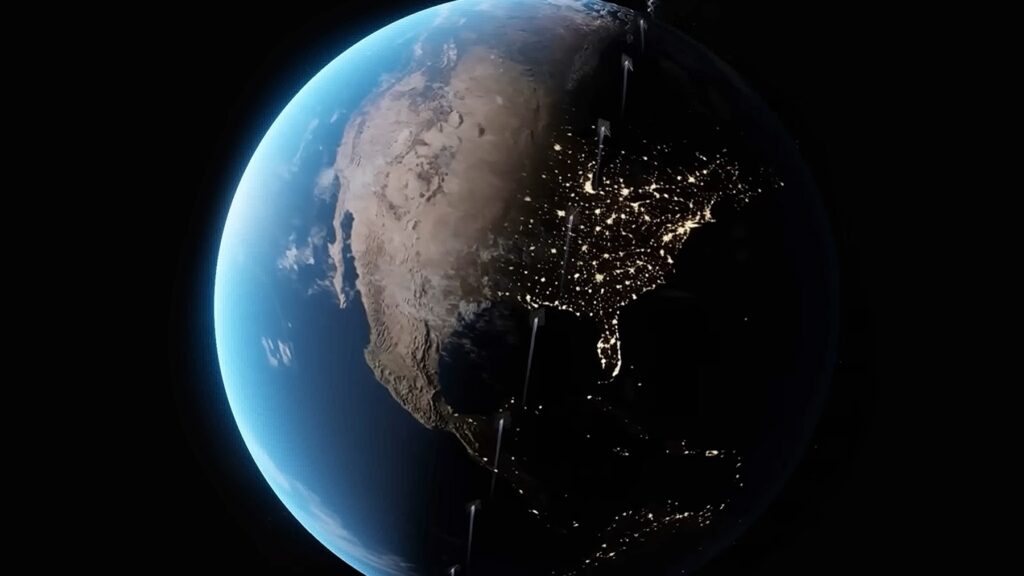
A California-based space tech company is proposing an ambitious plan to change how night looks on Earth by placing thousands of giant reflective mirrors in orbit. These space mirrors would redirect sunlight toward specific regions at night, potentially providing illumination similar to bright moonlight and even extending usable daylight in targeted areas.
Quick Insight:
By putting mirrors into a carefully chosen orbit that skirts the boundary between day and night, the system could reflect sunlight back to Earth after sunset — a futuristic idea that could impact energy use, night activity, and even how we see the night sky.
1. How the Satellite Mirrors Would Work
• The plan involves launching a large constellation of orbital mirrors designed to catch and redirect sunlight toward the Earth’s surface after dark.
• Each mirror could be tens of metres wide and positioned to reflect light toward specific ground targets like cities, farms, or infrastructure sites.
• Reflected light would appear as a soft glow, brighter than natural moonlight but dimmer than daylight, over the focused region.
2. Prototype Satellites and Deployment Timeline
• The company has applied for permission to launch a test satellite to trial this concept in orbit.
• During the initial test missions, ground observers in some areas might see the reflected light as a bright, moving point in the night sky.
• If the tests are successful, a larger constellation could be deployed in the coming years.
3. Potential Benefits and Uses
• **Extended light for solar farms:** Redirected sunlight could boost solar power generation by illuminating panels after sunset.
• **Nighttime activities:** Areas with limited street lighting or those that rely on artificial night work could benefit from extra illumination.
• **Support for isolated communities:** Remote or polar regions with long nights might gain a predictable source of extra light.
4. Concerns from Astronomers and Ecologists
• **Light pollution:** Adding artificial light to night skies could make it harder for astronomers to observe stars and galaxies.
• **Space crowding:** Thousands of additional orbital objects could increase the risk of collisions and create more space debris.
• **Wildlife disruption:** Many species depend on natural darkness for migration, feeding, and reproduction, and extra light could disturb these rhythms.
• **Human sleep impacts:** Brighter nights might interfere with natural human circadian cycles in illuminated regions.
Final Thoughts
The idea of bouncing sunlight back to Earth from space pushes the boundaries of space technology and energy innovation. While the potential benefits — from renewable energy support to improved nighttime illumination — are intriguing, the plan raises serious questions about night sky preservation, ecological impacts, and orbital safety. As the project progresses, these trade-offs will be central to debates about the future of our nights.
Tip: Concepts like satellite mirrors help us re-imagine how space technology might support life on Earth, but they also remind us to consider the delicate balance between innovation and natural systems.