Trump Signs New AI Executive Order Focused on Security, Innovation, and National Competitiveness
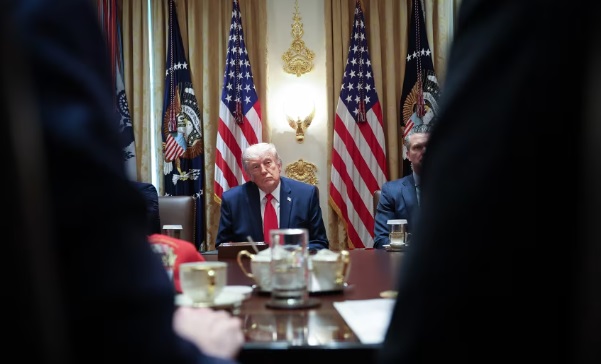
U.S. President Donald Trump has signed a new executive order aimed at strengthening America's leadership in artificial intelligence while addressing growing concerns about cybersecurity risks posed by advanced AI systems. The order introduces a voluntary framework that encourages AI companies to share their most powerful models with the federal government before public release for security evaluations.
Key Update: The executive order asks leading AI developers to voluntarily submit advanced AI models to federal agencies for cybersecurity testing up to 30 days before public release, while emphasizing that the government does not intend to create mandatory licensing or approval requirements for AI innovation.
A Shift in Trump's AI Strategy
The new executive order represents a notable shift in the administration's approach to artificial intelligence. While previous policies largely focused on minimizing regulation to maintain America's competitive advantage, growing concerns about powerful AI systems have prompted a more active role in monitoring potential security risks.
The administration maintains that innovation should continue without excessive government interference while ensuring that advanced AI technologies do not create new national security vulnerabilities.
What the Executive Order Requires
Under the new framework, major AI developers will be invited to voluntarily provide government agencies access to their most advanced models before public deployment.
Federal agencies would be given up to 30 days to evaluate the systems for cybersecurity risks, vulnerabilities, and potential threats to critical infrastructure. Participation remains voluntary, but the administration expects significant cooperation from industry leaders.
Why Cybersecurity Is a Growing Concern
As AI models become increasingly capable, experts have warned that they could potentially be used to identify software vulnerabilities, automate cyberattacks, or assist malicious actors in compromising critical systems.
Government officials believe early testing can help identify potential risks before advanced AI systems are widely deployed, reducing the likelihood of unintended security consequences.
Protecting Critical Infrastructure
A major focus of the executive order is safeguarding critical infrastructure sectors such as healthcare, banking, transportation, utilities, and emergency services.
The administration wants federal agencies and private-sector operators to work together to strengthen cyber defenses against increasingly sophisticated threats that may be enhanced by artificial intelligence technologies.
Creation of an AI Cybersecurity Clearinghouse
One of the order's most significant provisions is the establishment of an AI cybersecurity clearinghouse.
The initiative will help coordinate efforts between government agencies, AI developers, and critical infrastructure operators to identify software vulnerabilities, share threat intelligence, and prioritize security updates and remediation efforts.
No Mandatory AI Licensing
Despite introducing additional oversight, the executive order explicitly states that it should not be interpreted as creating mandatory government licensing, pre-clearance, or approval requirements for AI development and deployment.
This provision was included to reassure technology companies that the administration remains committed to supporting innovation and maintaining U.S. leadership in the global AI race.
Balancing Innovation and Security
The order attempts to strike a balance between two competing priorities: encouraging rapid technological advancement and protecting national security.
Supporters argue that voluntary reviews provide flexibility while still addressing legitimate concerns about powerful AI systems. Critics, however, question whether voluntary participation alone will be sufficient to manage future risks.
Industry Reaction
Several major AI companies have expressed support for collaborative approaches to AI safety and cybersecurity.
Technology executives generally welcomed the decision to avoid strict licensing requirements while recognizing the importance of addressing emerging risks associated with increasingly capable AI systems.
Competition with China Remains Central
A recurring theme throughout the administration's AI strategy is maintaining America's competitive position against China.
Officials have repeatedly emphasized that any regulatory framework must avoid slowing innovation or weakening the United States' leadership in artificial intelligence development and deployment.
What Happens Next?
Federal agencies will now begin developing cybersecurity benchmarks, testing procedures, and coordination mechanisms outlined in the executive order.
The effectiveness of the initiative will largely depend on industry participation and the government's ability to identify and address potential risks without slowing technological progress.
Final Thoughts
President Trump's new AI executive order reflects growing recognition that artificial intelligence presents both enormous opportunities and significant security challenges. By introducing voluntary government reviews of advanced AI models, the administration hopes to strengthen cybersecurity while preserving America's leadership in one of the world's most important emerging technologies.
The policy stops short of imposing mandatory regulations, instead relying on cooperation between government agencies and private companies. As AI capabilities continue to advance, this balance between innovation and oversight will remain one of the most important policy debates shaping the future of technology.
Tech Insight: The executive order signals a growing focus on AI cybersecurity while preserving a voluntary, innovation-friendly framework designed to keep the United States competitive in the global artificial intelligence race.