Nvidia Launches RTX Spark Chip to Bring AI Directly to Personal Computers
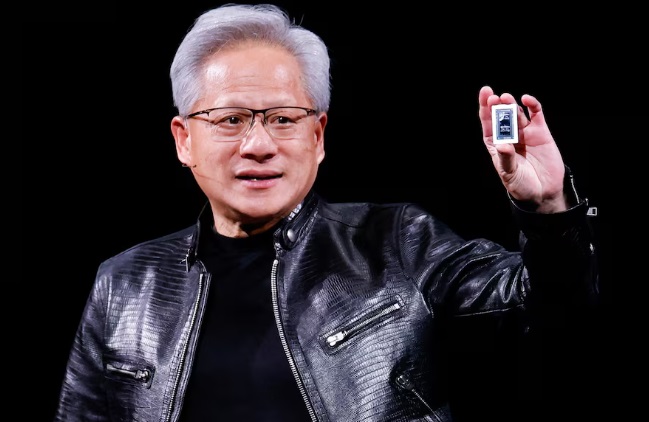
Nvidia unveiled its new RTX Spark PC chip at Computex 2026 in Taipei, marking a major step toward bringing advanced artificial intelligence capabilities directly into laptops and desktop computers. The new processor is designed to run AI agents locally on devices rather than relying exclusively on cloud-based computing, potentially transforming how consumers and businesses interact with AI technologies.
The announcement came during a keynote speech by Nvidia CEO Jensen Huang, who described the RTX Spark project as part of a multi-year collaboration with Microsoft aimed at reinventing the personal computer for the AI era.
Key Update: Nvidia introduced the RTX Spark PC chip, designed to run AI agents directly on personal computers. The company says the technology could transform traditional PCs into intelligent AI-powered assistants capable of handling complex tasks locally without depending entirely on cloud infrastructure.
Nvidia Unveils RTX Spark at Computex 2026
Speaking before a packed audience at Computex 2026 in Taipei, Nvidia CEO Jensen Huang introduced RTX Spark as a breakthrough AI processor designed specifically for personal computing.
The launch highlights Nvidia's ambition to extend its leadership beyond data centers and AI servers into the personal computing market. Huang explained that the chip was developed over three years in collaboration with Microsoft and Taiwan-based MediaTek.
Unlike traditional AI systems that depend heavily on remote cloud servers, RTX Spark enables advanced AI applications to run directly on personal devices, potentially improving performance, privacy, and responsiveness.
What Makes RTX Spark Different?
RTX Spark is designed to support what Nvidia describes as "Agentic AI" — intelligent software agents capable of performing tasks, making decisions, and assisting users autonomously.
| Traditional Computing |
RTX Spark AI Computing |
| User manually operates applications |
AI agents assist and automate tasks |
| Cloud-based AI processing |
Local AI processing on device |
| Internet often required |
Many AI functions available offline |
| Limited personalization |
Personal AI agents tailored to users |
By bringing AI directly onto PCs, Nvidia hopes to reduce latency, improve privacy protections, and provide faster AI interactions for users.
Industry Experts See a Major Turning Point
Industry analysts believe RTX Spark could represent one of the most significant developments in personal computing since the rise of smartphones and generative AI.
Neil Shah, co-founder of Counterpoint Research, said AI agents running locally on personal computers could eventually become common household tools.
According to Shah, the shift could transform the traditional application-centric computing model into one where intelligent AI assistants operate continuously, helping users perform tasks, manage information, and automate workflows more efficiently.
Nvidia Expands Beyond GPUs
While Nvidia remains best known for its graphics processing units (GPUs), recent announcements indicate that the company is increasingly expanding into broader computing markets.
The RTX Spark launch demonstrates Nvidia's growing focus on:
- AI-powered personal computers
- Central processing units (CPUs)
- Enterprise AI infrastructure
- AI software ecosystems
- Intelligent AI agent platforms
- Edge computing solutions
This diversification reflects Nvidia's strategy to become a comprehensive AI computing company rather than solely a graphics hardware manufacturer.
Vera CPU Targets a Massive New Market
In addition to RTX Spark, Huang devoted significant attention to Nvidia's Vera central processing unit (CPU), which is specifically designed to support AI agents and advanced computing workloads.
The Vera platform already has early adopters that include some of the world's leading AI organizations and technology companies. According to Nvidia, the CPU initiative opens access to a market worth approximately $200 billion.
Huang described Vera as a potential long-term growth engine for the company as demand for AI computing infrastructure continues to expand globally.
How AI Agents Could Change Everyday Computing
The RTX Spark platform is designed around the idea that future computers will be powered by intelligent AI agents capable of understanding user intent and acting on behalf of users.
Potential applications include:
- Managing schedules and communications
- Generating reports and documents
- Conducting research tasks
- Automating repetitive workflows
- Assisting with software development
- Providing personalized recommendations
Rather than simply opening and operating applications manually, users could increasingly interact with AI systems that handle tasks autonomously.
Jensen Huang Rejects AI Job Loss Fears
During his keynote address, Huang pushed back against concerns that artificial intelligence will eliminate large numbers of software engineering jobs.
Instead, he argued that AI increases worker productivity and enables organizations to tackle larger and more ambitious projects. According to Huang, businesses that become more productive often expand their operations, creating additional opportunities for skilled workers.
He described concerns about AI replacing software engineers as misplaced, emphasizing that demand for engineering talent continues to grow alongside AI adoption.
Taiwan's Central Role in the AI Revolution
Huang also highlighted Taiwan's importance to the global AI ecosystem. The island remains one of the world's most important semiconductor manufacturing hubs and plays a critical role in producing advanced chips used across the technology industry.
| Taiwan's Contribution |
Impact on AI Industry |
| Advanced Chip Manufacturing |
Supplies processors powering AI systems |
| Semiconductor Expertise |
Supports global technology innovation |
| Server Production |
Builds AI infrastructure hardware |
| Technology Supply Chains |
Connects major global technology companies |
Huang recently described Taiwan as the epicenter of the AI revolution and announced plans to significantly expand Nvidia's investments in the region.
What Computex 2026 Signals for the Future
The announcements at Computex suggest that the next phase of AI development will focus increasingly on local computing rather than relying entirely on centralized cloud infrastructure.
Key trends emerging from the event include:
- Growth of AI-powered PCs
- Expansion of AI agents
- Increased edge computing capabilities
- Rising demand for AI-specific processors
- Greater integration between hardware and AI software
- Stronger focus on productivity-enhancing AI tools
These developments indicate that AI is becoming deeply integrated into everyday computing experiences.
Looking Ahead
Nvidia plans to begin delivering RTX Spark-powered systems later this year. If successful, the technology could accelerate the adoption of AI-first computing experiences where intelligent assistants operate continuously alongside users.
The launch also reinforces Nvidia's position as one of the most influential companies shaping the future of artificial intelligence. By targeting both enterprise infrastructure and consumer devices, the company is attempting to build a complete ecosystem for the AI era.
Final Thoughts
Nvidia's RTX Spark announcement represents a major milestone in the evolution of personal computing. By moving advanced AI capabilities directly onto laptops and desktop computers, the company is seeking to transform the PC into a platform powered by intelligent AI agents capable of assisting users in real time.
The launch of RTX Spark, combined with Nvidia's expanding focus on CPUs through the Vera platform, demonstrates a broader strategy aimed at capturing new opportunities across the AI ecosystem. Rather than remaining focused solely on graphics processors, Nvidia is positioning itself at the center of the next generation of computing.
As AI adoption accelerates worldwide, technologies like RTX Spark could fundamentally reshape how people interact with computers, potentially ushering in an era where AI-powered assistants become as common as web browsers and smartphone apps are today.
Tech Insight: Nvidia's RTX Spark chip is designed to run AI agents directly on personal computers, potentially reducing reliance on cloud services while enabling faster, more private, and more intelligent computing experiences for consumers and businesses.
```