Nigeria's Safe Schools Initiative 'Exists Only on Paper' as Attacks on Students Persist

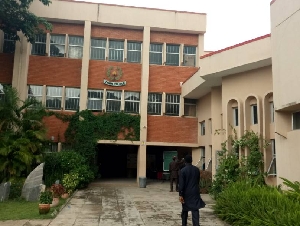
The Minister of Education, Tunji Alausa.
More than a decade after the Chibok girls' abduction shocked the world, Nigeria's Safe Schools Initiative remains largely ineffective as school attacks continue unabated across the country, education stakeholders have warned.
Despite the Federal Government launching a Smart School Protection Strategy in February 2026 and creating a dedicated Department of Safe School Initiative, critics say policy efforts have failed to translate into real protection on the ground for Nigeria's most vulnerable students and teachers.
Key Update: Education stakeholders report that school attacks have continued despite government promises. The Chairperson of the Association of International School Educators in Nigeria warned that safety standards remain "stronger on paper than in practice," with attacks now spreading beyond rural communities to cities like Lagos.
Background: The Safe Schools Initiative
The Safe Schools Initiative was introduced following the abduction of 276 schoolgirls from Chibok, Borno State, in April 2014. The attack was expected to be a turning point in Nigeria's approach to school safety, leading to the development of Minimum Standards for Safe Schools.
In February 2026, the Federal Government launched a renewed Smart School Protection Strategy aimed at strengthening security through collaboration with the Nigeria Security and Civil Defence Corps (NSCDC). The Minister of Education, Dr. Maruf Olatunji Alausa, described school protection as a "non-negotiable priority" and announced the creation of a dedicated Department of Safe School Initiative to coordinate implementation.
Key Components of the Strategy
The government's Smart School Protection Strategy includes several security measures:
- Emergency panic alert systems for rapid incident reporting
- Enhanced command-and-control centres designed for intelligence-driven interventions
- Rapid response mechanisms to shorten reaction times during attacks
- The NSCDC as lead operational agency for school security coordination
- Exploration of sustainable financing models for nationwide implementation
Stakeholders: 'Stronger on Paper Than in Practice'
Kofo Karunwi, Chairperson of the Association of International School Educators in Nigeria, delivered a stark assessment of the current situation.
"Sadly, more than a decade later, recurring attacks in states such as Borno and Oyo suggest that these standards have remained stronger on paper than in practice," Karunwi said.
She warned that insecurity around schools is no longer an isolated rural problem, pointing to recent threats in Nigeria's largest city.
"Only a few months ago, schools in Lagos were targeted with bomb and kidnap threats, proving that no region can afford complacency," she added.
Resource Gaps and Implementation Failures
Karunwi highlighted significant resource and enforcement gaps undermining school safety efforts.
"Schools are expected to implement safety measures, yet many lack the resources, intelligence support and enforcement backing required to make these measures effective," she said.
She also decried what she described as inadequate funding priorities for education safety:
"At a time when enormous resources are routinely committed to politics and other public expenditures, many schools remain exposed, underprotected and unequipped to respond to emergencies."
Karunwi called for mandatory risk assessments, perimeter security, emergency response systems, and school safety audits.
Concerned Parents: Safeguarding Requires Real Security
Kemi Koleowo, National Coordinator of Concerned Parents Educators, faulted gaps in the enforcement of school safeguarding policies.
"There is a Safe Schools Initiative, but safeguarding requires securing the environment with competent security arrangements. Bandits should not have easy access to schools," Koleowo said.
She questioned the effectiveness of oversight mechanisms within the education system:
"Government officials in education have quality assurance departments, but are they doing their work? Safeguarding should be part of policy enforcement."
Koleowo also emphasized the need for improved security awareness, including simple measures like verification codes for child pick-up.
NAPPS Declares National Emergency
The National Association of Proprietors of Private Schools (NAPPS) issued a statement declaring that increasing insecurity around schools has become a national emergency requiring urgent action.
Signed by National President Chief 'Yomi Otubela and National Secretary Evangelist Ajibade Augustine, the association warned that schools are increasingly becoming targets of abductions and violence.
"Across different parts of Nigeria, we have witnessed painful incidents where innocent school children and their teachers were kidnapped, traumatised, and subjected to fear and uncertainty," the statement said.
NAPPS called for improved intelligence gathering, stronger surveillance around schools, and community-based policing to enhance security.
Teacher Welfare Crisis Compounds Security Risks
Olanrewaju Osibote, Chief Executive Officer of the Margaret Modinat Foundation, linked poor teacher welfare to worsening school security conditions.
"Most schools are not secure. Teachers are not well taken care of. When security and welfare are poor, you cannot expect commitment or safety in the system," Osibote said.
The warning highlights how low morale and poor compensation for educators may undermine security protocols, as teachers who feel undervalued may be less vigilant or less willing to implement safety measures properly.
Why Implementation Has Failed
Despite repeated government promises, several factors continue to undermine the Safe Schools Initiative:
1. Weak enforcement mechanisms within the education system's quality assurance departments
2. Inadequate funding prioritization with enormous resources directed to politics rather than school protection
3. Lack of intelligence support leaving schools unable to anticipate attacks
4. Poor coordination between federal, state, and local security agencies
5. Absence of accountability for officials who fail to implement safety measures
Regional Spread: Beyond the North-East
While the Chibok abduction in Borno State drew global attention to Nigeria's North-East region, stakeholders warn that school attacks have now spread to other parts of the country.
Recent bomb and kidnap threats against schools in Lagos — Nigeria's commercial capital and most populous city — demonstrate that no region is immune. Oyo State in the South-West has also experienced recurring attacks, contradicting the narrative that school insecurity is solely a North-East problem.
The Human Cost of Inaction
The stakeholders collectively warned that unless the Safe Schools Initiative moves beyond policy formulation to effective implementation, Nigeria risks deepening its education sector crisis.
"The safety of children cannot continue to depend on luck. Action delayed only increases the risk of further attacks spreading to more states and communities," Karunwi said.
NAPPS added: "Every child deserves to learn in a safe, peaceful and protected environment. School safety must become a national priority and not merely a reaction after tragic incidents occur."
Final Thoughts
The gap between Nigeria's Safe Schools Initiative on paper and the reality of continued attacks on students and teachers represents a profound policy failure. More than a decade after Chibok shocked the world, the government has created departments, launched strategies, and made announcements — but children remain vulnerable, teachers remain unprotected, and schools remain targets.
The stakeholders' message is clear: school safety requires more than policy documents. It demands adequate funding, competent security personnel, intelligence support, enforcement mechanisms, and genuine accountability. Without these elements, the Safe Schools Initiative will remain exactly what critics say it is today — an initiative that exists only on paper, while Nigerian children pay the price with their safety, their education, and sometimes their lives.
Insight: Nigeria's Smart School Protection Strategy includes modern security solutions like emergency panic alert systems and command-and-control centres — but stakeholders say without funding, enforcement, and accountability, even the best technology cannot protect students.














.jpeg)