Minority Union at Samsung Electronics Challenges Pay Deal in Court
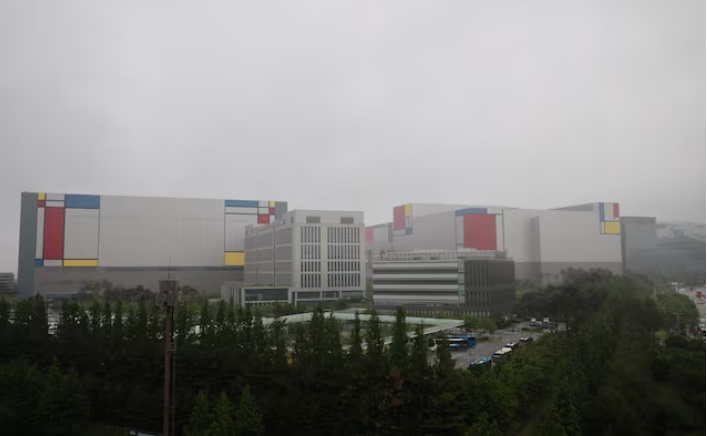
A Samsung Electronics semiconductor plant in Pyeongtaek, South Korea
A minority labor union at Samsung Electronics representing consumer electronics workers will ask a South Korean court to suspend a pay deal that primarily benefits employees in the company's booming chip division.
The legal challenge comes after two other unions — including Samsung's largest union — voted to approve the pay deal this week, averting a planned 18-day strike but exposing deep divisions among the tech giant's workforce.
Key Update: The Samsung Electronics Co Union (SECU), with about 13,000 members mostly from smartphone, TV, and home appliances divisions, will ask a court to suspend implementation of the pay deal after losing a vote on the government-mediated agreement.
Background: The AI Boom Creates a Divided Workforce
Samsung Electronics is the world's largest memory chip and TV maker. The company's memory chip division has seen profits soar amid the artificial intelligence boom, creating a massive gap in bonus potential between chip workers and those in other divisions.
The pay deal approved this week provides huge bonuses for workers in Samsung's memory chip division, while employees in smartphone, TV, and home appliances units did not fare as well under the 11th-hour government-mediated agreement.
The Unions Involved
Three unions operate at Samsung Electronics:
- Samsung Electronics Co Union (SECU): A minority union with approximately 13,000 members, mostly from smartphone, TV, and home appliances divisions. This union is challenging the pay deal in court.
- Samsung's largest union: Voted to approve the pay deal. Declined to comment on the legal challenge.
- A third union: Also voted to approve the pay deal this week.
The Legal Challenge
SECU had initially filed an injunction to suspend the vote on the pay deal. However, the vote proceeded and the deal was approved by the two larger unions.
Now that the vote has passed, SECU will ask the court to suspend implementation of the pay deal entirely. A lawyer for the union stated during a Friday court hearing that legal counsel will submit documents next week revising the injunction request.
The union expects a court to make a ruling within approximately one month.
How a Strike Was Averted
The approval of the government-mediated agreement came at the 11th hour, successfully averting a planned 18-day strike that would have disrupted Samsung's operations.
The mediation involved South Korean government officials who helped broker the compromise between the company and its unions. However, the agreement left some employees outside the chip division dissatisfied with their compensation relative to their colleagues in the memory chip business.
The Core Dispute: Uneven Bonuses
The fundamental tension in this dispute reflects a broader challenge facing technology conglomerates with diverse business units. Samsung's memory chip division is currently a superstar performer, benefiting enormously from the global AI boom that has driven demand for high-bandwidth memory and advanced chips.
By contrast, Samsung's consumer electronics divisions — including smartphones, TVs, and home appliances — operate in mature, competitive markets with thinner profit margins. Workers in these divisions argue that the pay deal disproportionately rewards chip division employees while leaving them behind, despite being part of the same company.
What SECU Wants
The minority union is seeking to have the court suspend implementation of the entire pay deal. If successful, this would force Samsung back to the bargaining table to negotiate new terms that more equitably balance compensation across all divisions.
SECU represents a significant portion of Samsung's non-chip workforce, giving the union considerable influence despite its "minority" designation compared to Samsung's largest union.
Samsung's Position
The company was not immediately available for comment when Reuters sought response. Samsung has not publicly stated whether it will oppose the injunction or defend the pay deal as negotiated.
The largest union at Samsung, which supported the deal, also declined to comment on the legal challenge, suggesting that internal union tensions may be playing out behind the scenes.
What Happens Next
The legal process will unfold over the coming weeks:
1. Next week: SECU will submit revised injunction documents to the court
2. Within one month: The court is expected to issue a ruling on whether to suspend the pay deal
3. If suspension is granted: The pay deal cannot be implemented until the court reaches a final decision on its validity
4. If suspension is denied: The deal will move forward with chip workers receiving their approved bonuses
Why This Matters for Tech Industry
The Samsung pay dispute highlights a growing challenge across the technology sector: how to fairly compensate workers when different divisions have vastly different financial performance.
As artificial intelligence creates massive winners within tech companies — chip divisions, AI platform teams, cloud infrastructure — while traditional hardware and consumer electronics divisions grow more slowly, similar disputes are likely to emerge at other major technology firms globally.
The court's ruling in South Korea could set a precedent for how tech companies structure compensation when internal inequality grows significantly.
Broader Labor Context in South Korea
Samsung has historically resisted strong unionization efforts. The company's founder Lee Byung-chul was famously anti-union, and for decades Samsung effectively prevented union organizing. That changed under pressure from the South Korean government and global investors.
Today, Samsung Electronics has multiple unions representing different segments of its workforce — a reflection of both progress in Korean labor rights and the fragmentation that can occur when unions organize along division or job-type lines rather than as a single, unified body.
Final Thoughts
The court challenge by SECU represents more than just a dispute over pay — it reflects the deep structural changes underway at Samsung Electronics as the AI boom reshapes which parts of the company generate value.
Workers in Samsung's smartphone, TV, and home appliances divisions watched as their colleagues in the memory chip division saw profits — and expected bonuses — soar. The government-mediated deal that averted an 18-day strike may only postpone a larger confrontation over how to fairly compensate all workers when one division dramatically outperforms others.
With a court ruling expected within a month, Samsung faces not only a legal challenge but a fundamental question about workforce equity in the age of AI-driven economic divergence.
Tech Insight: The AI boom is creating internal inequality at major tech companies. Samsung's pay dispute — where chip workers get massive bonuses while consumer electronics employees are left behind — may be the first of many similar labor conflicts across the industry.





.jpeg)