China Expands Massive Desert Defense Network Near Nuclear Missile Silos
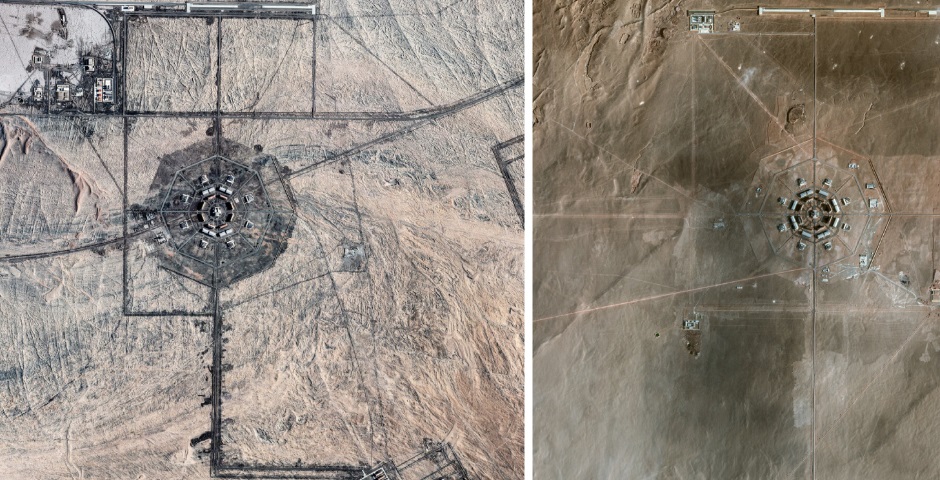
China is rapidly expanding a huge military infrastructure network in its remote northwestern desert, according to newly reviewed satellite imagery that has raised fresh concerns among global security analysts and nuclear policy experts.
The images reveal extensive construction near China’s Hami nuclear silo field, including more than 80 launch pads, fortified bunkers, command facilities, communications systems, and octagon-shaped military installations believed to support the country’s expanding nuclear deterrent strategy.
Security analysts say the large-scale development appears designed to strengthen China’s ability to survive a potential first strike and maintain the capability to launch a retaliatory nuclear response.
Key Update: Satellite imagery reviewed by analysts shows China constructing an extensive defensive and launch infrastructure network near its nuclear missile silos in the remote Xinjiang desert.
What the Satellite Images Revealed
Commercial satellite imagery shows more than 80 concrete launch pads spread across thousands of square kilometers near the Hami silo field in China’s Xinjiang region.
Analysts reviewing the images identified:
- Launch pads for mobile missile systems
- Reinforced bunkers and storage areas
- Military vehicle staging zones
- Air-defense missile positions
- Communications and electronic warfare facilities
- Airfields and rail connections
- Large octagon-shaped command complexes
The scale and organization of the facilities suggest a coordinated effort to modernize and protect China’s land-based nuclear forces.
The Strategic Importance of Hami
The Hami nuclear silo field has become one of the most important elements of China’s growing nuclear arsenal.
Located deep within China’s remote northwest desert region, the silo field houses some of the country’s longest-range intercontinental ballistic missiles (ICBMs), capable of reaching targets across the United States and other regions.
Military analysts believe the desert terrain provides both isolation and protection while enabling large-scale construction away from populated areas.
Understanding China’s “Second-Strike” Capability
The infrastructure appears focused on strengthening what nuclear strategists call “second-strike capability.”
This means ensuring China can still launch nuclear retaliation even after suffering an enemy nuclear attack. A reliable second-strike capability is considered central to nuclear deterrence because it discourages adversaries from attempting a first strike in the first place.
China has long maintained a “no first use” nuclear policy, officially stating it would not initiate a nuclear conflict. However, growing tensions involving Taiwan and competition with the United States have intensified international attention on Beijing’s military modernization efforts.
The Octagon Military Complexes
One of the most unusual features revealed in the imagery is the construction of giant octagon-shaped military installations in eastern Xinjiang.
The facilities contain:
- Central command-style buildings
- Housing areas for military personnel
- Vehicle storage sections
- Temporary military structures
- Camouflaged operational zones
- Reinforced bunkers and weapons areas
Recent satellite images also showed military exercises and movement of large vehicles around the northern octagon during April and May 2026.
Possible Roles of the Launch Pads
Security scholars believe the launch pads may support several military functions.
Potential uses include:
- Mobile intercontinental ballistic missile deployment
- Air-defense missile systems
- Electronic warfare operations
- Radar and communications support
- Rapid military dispersal during conflict situations
Analysts say some larger pads may support truck-mounted nuclear-capable missile launchers similar to those displayed by China during recent military parades.
China’s Expanding Nuclear Modernization
China’s nuclear modernization program has become one of the most closely monitored military developments in the world.
According to recent defense assessments, Beijing is rapidly increasing the sophistication of its nuclear infrastructure while improving:
- Early-warning systems
- Missile survivability
- Communications security
- Mobile launch capabilities
- Space-based detection systems
Analysts believe these improvements are intended to ensure China’s nuclear forces remain operational even during high-intensity military conflict.
Concerns From Security Analysts
Several nuclear policy experts described the scale of the construction as highly unusual.
Some analysts noted that unlike the United States and Russia, which rely heavily on large numbers of hardened silos and submarines, China appears to be building a broader defensive support network around its missile infrastructure.
Experts also highlighted possible communications towers, satellite facilities, and underground conduits that may contain fiber-optic systems linking the installations together.
Taiwan Tensions and Nuclear Competition
The growing military build-up comes amid rising tensions between China and the United States over Taiwan.
China considers Taiwan part of its territory, while Taiwan rejects Beijing’s sovereignty claims. The issue remains one of the most sensitive flashpoints in global geopolitics.
Security analysts warn that increased military competition between the two powers could accelerate nuclear modernization efforts on both sides and increase global strategic instability.
How the Global Nuclear Balance Is Changing
China’s expanding nuclear infrastructure reflects broader shifts in the global balance of power.
For decades, the United States and Russia dominated global nuclear capabilities. However, China’s rapid military investments are increasingly positioning Beijing as a major strategic nuclear power alongside Washington and Moscow.
The developments also highlight growing international concern over:
- Arms race escalation
- Military transparency
- Nuclear command systems
- Regional conflict risks
- Missile defense competition
Final Thoughts
The newly revealed infrastructure in China’s northwestern desert demonstrates the enormous scale of Beijing’s ongoing military modernization efforts.
While many details about the facilities remain uncertain, the extensive network of launch pads, command centers, bunkers, and communications systems strongly suggests China is investing heavily in protecting and strengthening its nuclear deterrent capabilities.
As tensions continue rising between major global powers, the developments are likely to intensify international debate about nuclear stability, military transparency, and the future of global security competition.
Security Insight: Analysts say the scale of China’s desert military infrastructure suggests Beijing is prioritizing survivability, mobility, and secure communications for its expanding nuclear deterrent systems.